

Mushrooms are having the biggest wellness moment since matcha, and yes, most of it holds up. The science on adaptogenic fungi is actually older and sturdier than the TikTok-fication would suggest — which is why the smart nutritionists got there first.
The Trend Didn’t Start Where You Think It Did
Scroll wellness Instagram in 2024 and you’d think Erewhon invented the mushroom latte. It didn’t. The current fungi wave traces back to a much less glossy origin: biohacker podcasts around 2018, then functional-medicine practitioners quietly recommending Lion’s Mane for brain fog, then Four Sigmatic putting Chaga in instant coffee packets and making the category look chic.
Then two things happened at once. The pandemic sent everyone looking for wellness options that weren’t just Emergen-C, and conversations about Lion’s Mane started making the rounds in wellness circles and podcasts.
Add the Paul Stamets factor. His Netflix documentary, Fantastic Fungi, pulled mushrooms out of the crunchy-mom aisle and into dinner-party conversation. By the time Gwyneth was selling mushroom-infused everything, the actual dietitians had moved on to arguing about extraction methods.
That’s the tell. When practitioners stop debating whether something works and start debating how it’s processed, the category has arrived.
The Six Mushrooms Actually Worth Knowing
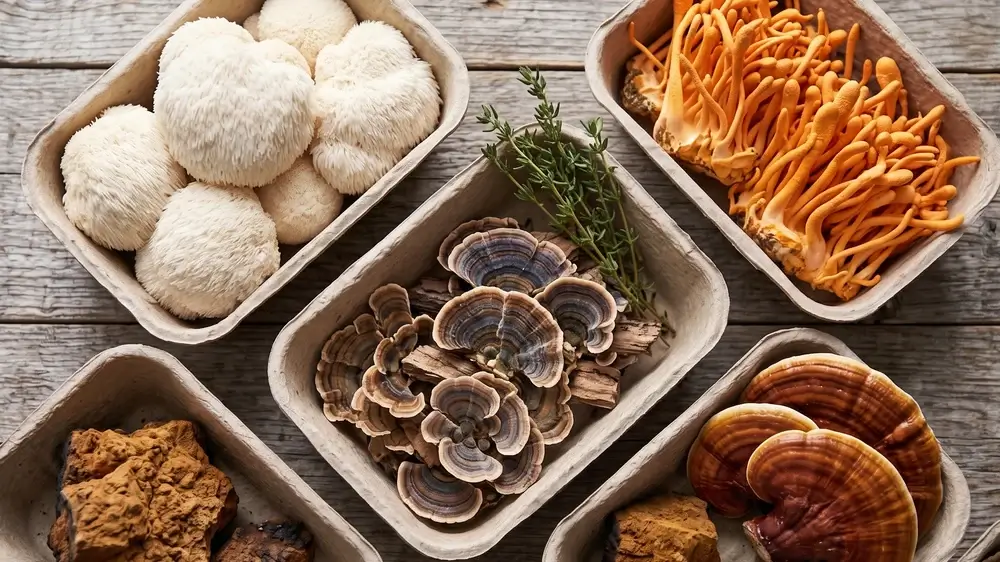
Not every fungus deserves a spot in the cabinet. The ones people in the space talk about most:
- Lion’s Mane — a shaggy white mushroom long used in East Asian culinary traditions
- Reishi — sometimes called the “mushroom of immortality” in traditional Chinese medicine
- Cordyceps — a curious fungus with a long history in traditional Tibetan and Chinese practices, and a favorite talking point in endurance-athlete circles
- Chaga — a dark, woody fungus that grows on birch trees and has a long folk history in Northern Europe and Russia
- Turkey Tail — a colorful bracket fungus with centuries of use in traditional East Asian preparations
- Maitake — a culinary staple in Japanese cuisine, often called “hen of the woods”
Nothing here is a health claim — no specific outcomes are promised, and mushrooms are not a substitute for medical care.
The catch: potency depends entirely on whether the product uses the fruiting body (the actual mushroom) or mycelium grown on grain. A lot of cheap supplements are mostly the latter, which means you’re paying for oat filler with mushroom DNA on it. Read the label. If it says “mycelium on grain” or doesn’t specify, keep scrolling.
So What Do You Actually Take?
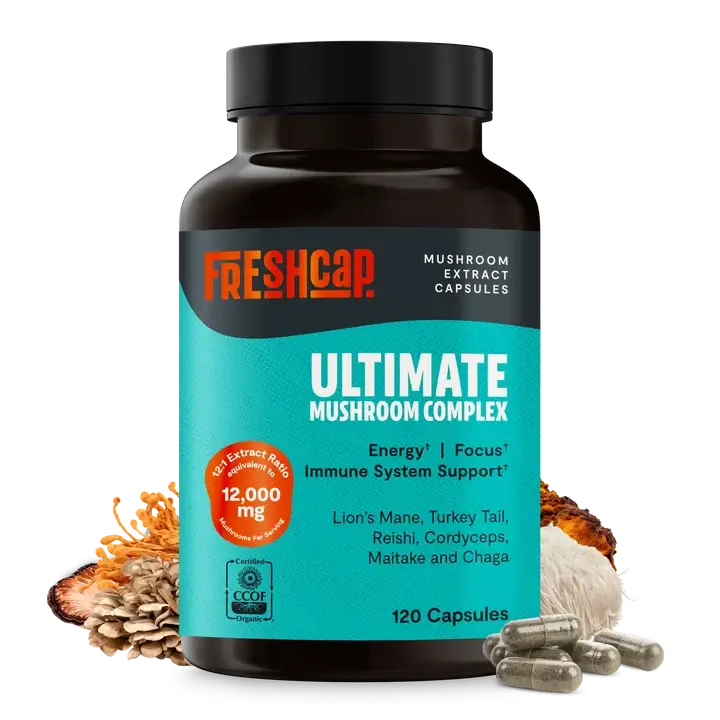
Building a six-mushroom stack from scratch is expensive and, frankly, annoying. For anyone who wants the full lineup without turning her kitchen counter into a supplement shrine, FreshCap’s Ultimate Mushroom Complex folds all six — Lion’s Mane, Reishi, Cordyceps, Chaga, Turkey Tail, and Maitake — into one capsule made from fruiting bodies, not mycelium filler.
Disclosure: the FreshCap link above is an affiliate link, meaning we may earn a commission if you purchase through it at no extra cost to you.
In our opinion, it’s one of the least fussy entry points we’ve come across, and the sourcing transparency stands out to us compared to other options in the category. Whether it’s the right pick for you is a personal call.
To round out the routine, BrickHouse Nutrition is worth a look. Their lineup pairs well with a mushroom stack — think targeted formulas for energy, gut health, and daily performance that fill in where a single mushroom complex leaves off. If FreshCap is the foundation, BrickHouse is the layer on top for anyone who wants the full functional-nutrition setup without turning it into a part-time job.
Where the Hype Gets Ahead of the Science
Mushrooms are not a personality. They are also not a cure for anything, and the corner of wellness content claiming otherwise is where things get sketchy.
A few reality checks worth holding onto:
- Cognitive effects are subtle. Lion’s Mane isn’t Adderall. Any anecdotal shifts people describe tend to unfold over weeks and months, not in an hour.
- “Adaptogen” is not a regulated term. It comes from Soviet-era research and describes a category of herbs and fungi thought to help the body handle stress. Useful concept, loose definition.
- Mushroom coffee tastes fine, but the dose is usually small. A latte packet might contain 250mg of extract, which is a fraction of what’s typically discussed in enthusiast circles.
- Interactions exist. Reishi can thin blood. Anyone on medication should talk to a doctor before stacking.
The nutritionists worth following — Jessica Sepel, Dr. Mark Hyman, the Kresser Institute crowd — are careful about all of this. The ones selling you a “mushroom protocol” for $400 are not.
What’s Coming Next in the Fungi Aisle
The category is splintering, which is what always happens right before a trend either matures or collapses. A few directions to watch:
- Functional beverages beyond coffee. Sparkling adaptogen drinks, mushroom-based nootropic sodas, and mushroom-infused sparkling waters are multiplying.
- Skincare. Tremella and Reishi are showing up in serums from brands like Youth To The People, pitched as hydration and antioxidant ingredients.
- Food, not supplements. Expect more actual culinary mushroom products — jerky, broths, pastas — as consumers get tired of capsules.
- Regulation questions. As the market grows, expect more scrutiny on label accuracy and beta-glucan content claims.
The trend has legs because the underlying category has substance. That’s rarer than it sounds. For more of what’s actually worth your time, we’re at Peak&Pick.