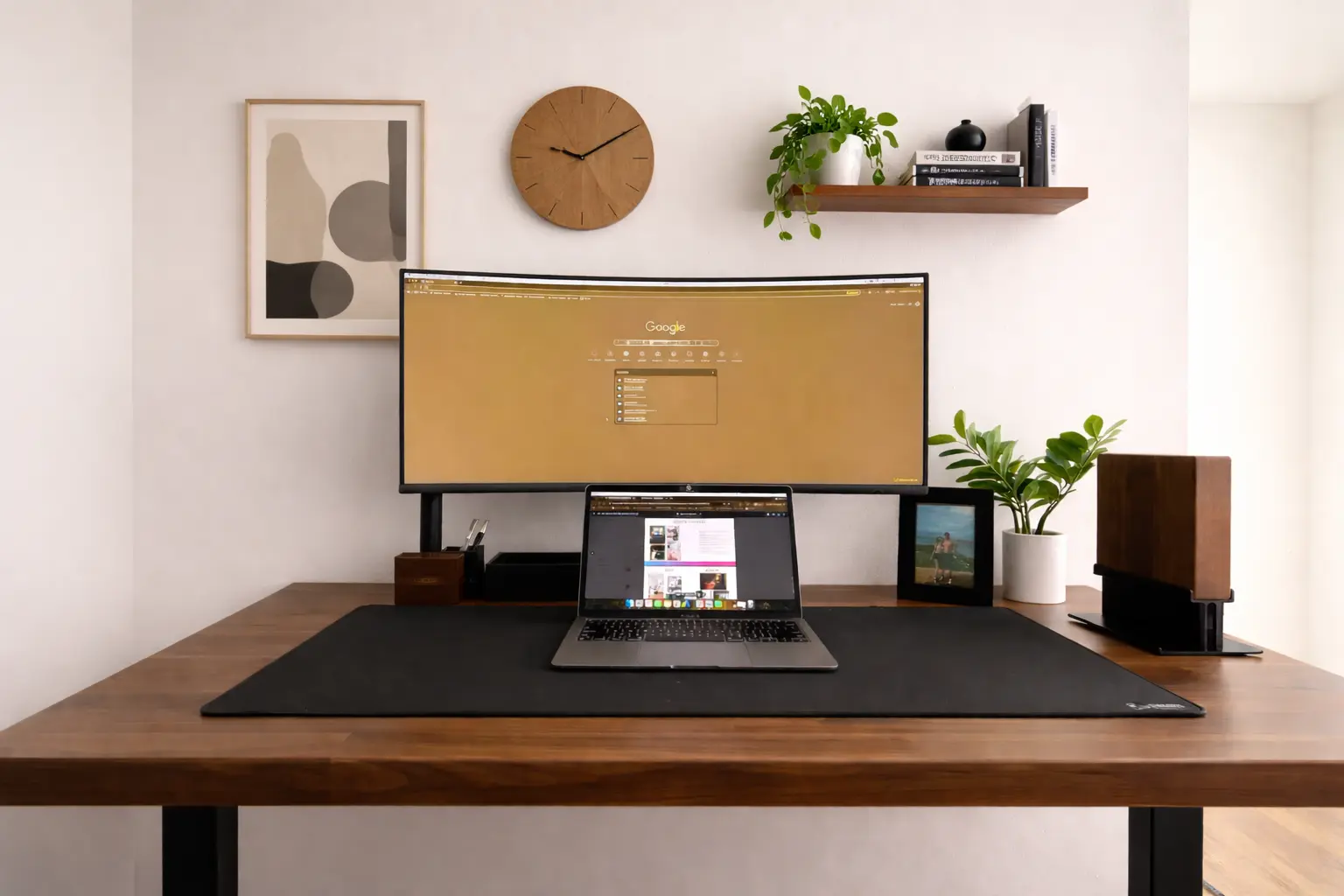
Working From a Small Space Changes Everything
Living in a smaller space changes the way work has to function.
There’s no luxury of a dedicated office room, no separation between “home” and “work,” and definitely no extra square footage sitting unused. Every piece of furniture has to earn its place—and ideally, serve more than one purpose.
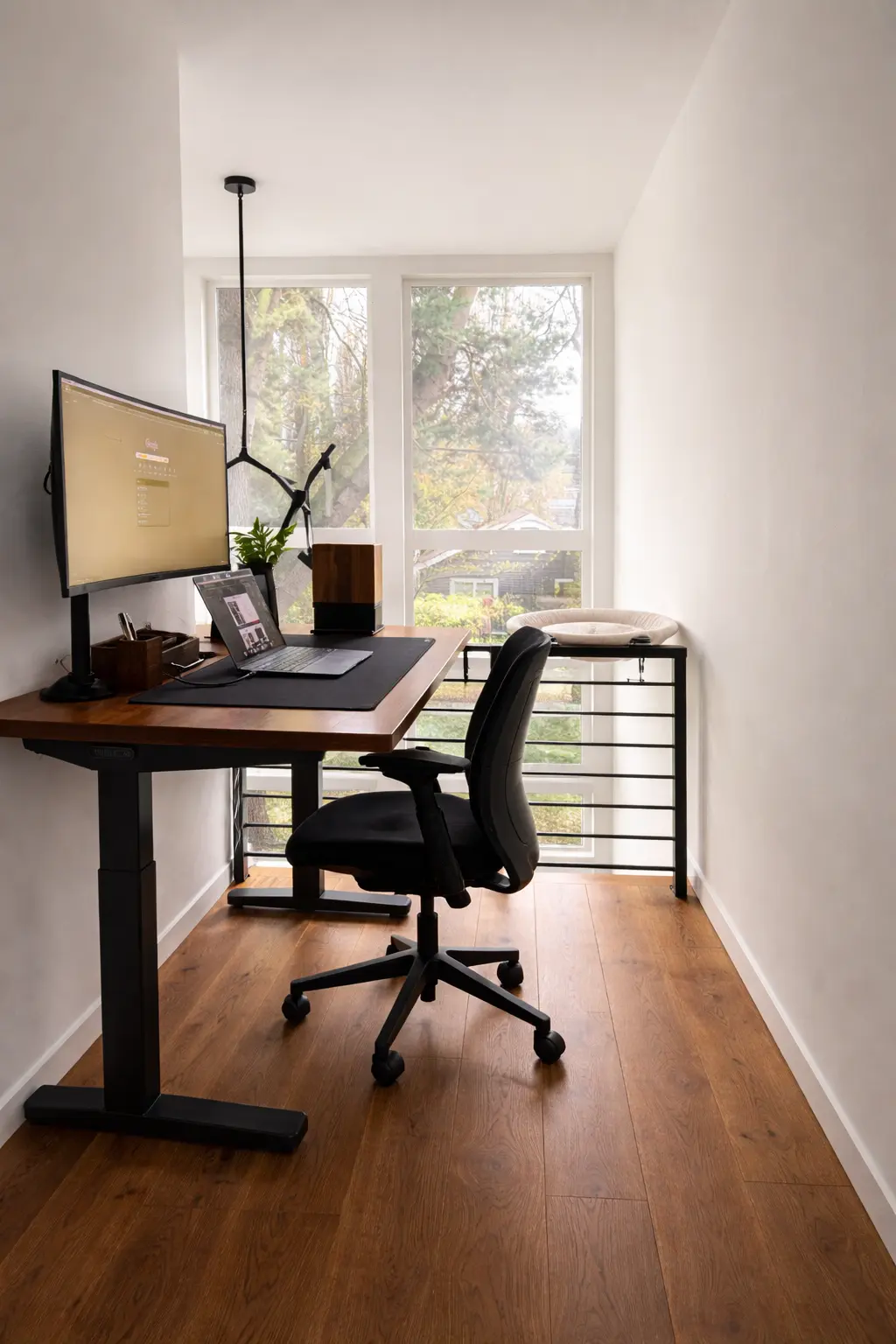
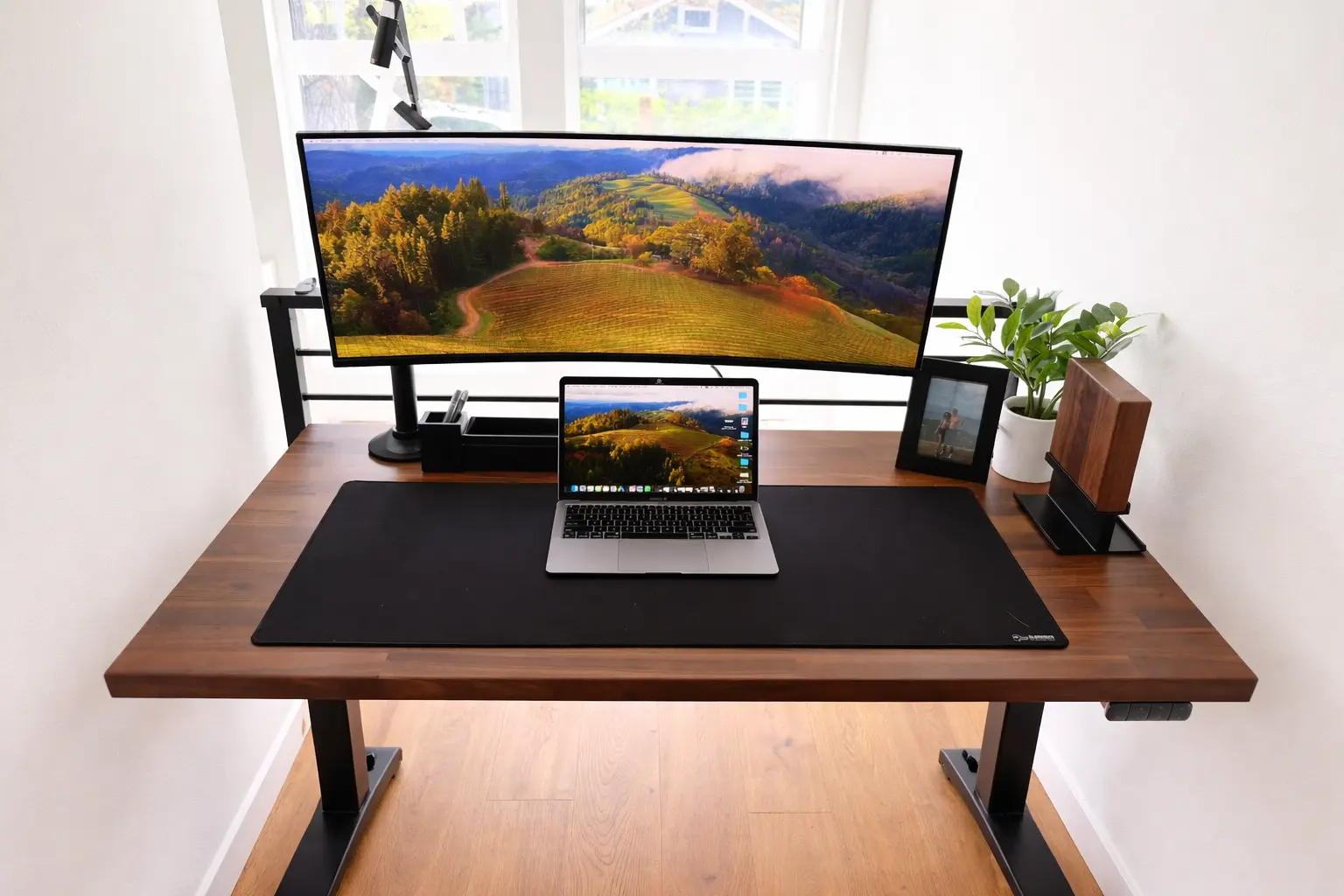
That’s exactly the situation this setup came from: a townhome with limited space and an awkward nook that never quite felt useful. It wasn’t a room that naturally said “home office.” It was just a corner that needed to be reimagined.
That’s where the UPLIFT V3 Standing Desk ended up making the biggest difference.
Instead of trying to force a traditional desk into a non-traditional space, the approach shifted toward something more intentional: customizing the desk to fit the space, not the other way around.
And that completely changed how usable the area became.
Turning an Unused Nook Into a Functional Workspace
The biggest challenge in small-space living is not just fitting things in—it’s making them work well once they’re there.
The nook in this townhome wasn’t originally designed for productivity. It was tight, slightly awkward in shape, and easy to ignore. But it had potential, which is often the case with smaller homes—there are hidden pockets of space that only become useful once the right setup exists.
That’s where customization mattered most.
Why UPLIFT V3 Worked So Well in a Small Space

Custom Desk Sizing That Actually Fits the Room
One of the most important decisions was choosing the exact width and depth of the UPLIFT V3 Desk.
Instead of trying to make a standard-size desk fit into a tight corner, the desk was built around the space itself. That alone changed everything.
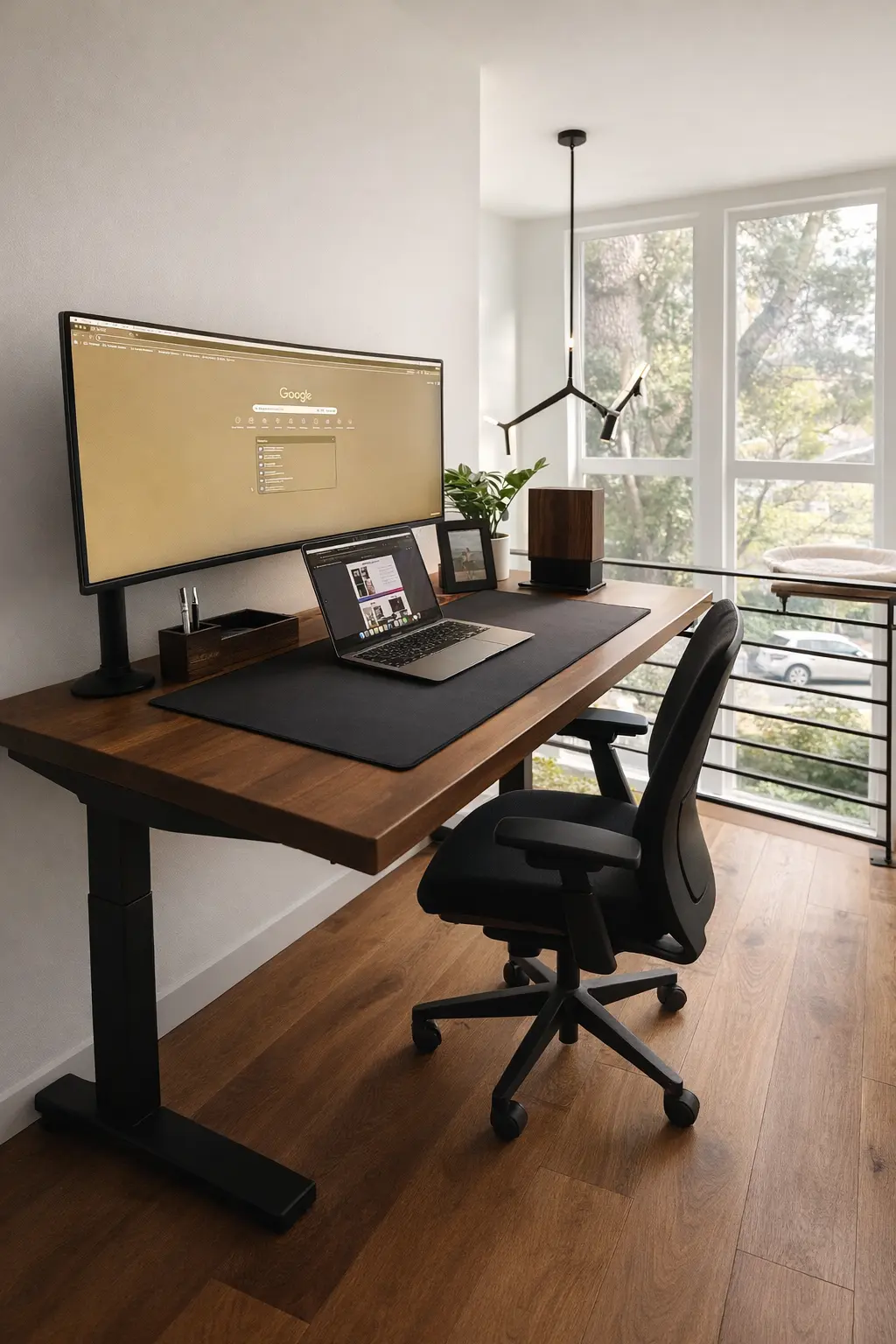
The result wasn’t a cramped workstation or an oversized piece that dominated the room—it was a desk that felt intentional. It fit the nook perfectly, leaving just enough breathing room around it so the space still felt open rather than overloaded.
That kind of precision matters more than it seems. In small spaces, even a few extra inches can make the difference between something feeling functional or frustrating.
A Desk That Adapts Through Accessories
What really elevated the experience was how customizable the V3 is beyond just size.
The accessory ecosystem allowed the desk to evolve based on how the space is used. Instead of being locked into one setup, it became flexible.
Cable management helped keep everything visually clean, which is especially important in a small space where clutter feels amplified. Monitor arms freed up surface area, making the desk feel larger than it actually is.
But the most impactful add-on ended up being something simple: wheels.
Lockable Wheels That Completely Change How the Space Works
Adding lockable wheels turned the desk from a fixed piece of furniture into something dynamic.
In a small home, flexibility isn’t a bonus—it’s essential.
Being able to move the desk changes how the entire space functions. Depending on the time of day or even just the mood, the desk can be repositioned slightly—shifted toward natural light, angled differently to open up the room, or adjusted to support a different type of work setup.
Sometimes it’s pushed closer into the nook for focus-heavy work. Other times it’s angled outward to make the room feel more open and less static.
And when it needs to stay put, the locking mechanism keeps everything stable and secure. There’s no compromise between mobility and functionality.
It’s one of those features that doesn’t seem essential until it’s used consistently—and then it becomes difficult to imagine the setup without it.
A Standing Desk That Actually Gets Used
A lot of standing desks end up underused because they feel inconvenient to adjust or too rigid in how they’re set up.
That wasn’t the case here.
The V3’s height adjustment system makes it easy to switch between sitting and standing without breaking focus. It becomes part of the workflow instead of an interruption to it.
In a small space, where movement might already feel limited, that ability to change posture and position throughout the day adds a noticeable difference in energy and focus.
It stops the workspace from feeling static.
Assembly That Didn’t Add Stress to the Process
Setting up furniture in a small space can already feel like a logistical puzzle—so the last thing needed is a complicated assembly experience.
The V3 kept things straightforward.
The instructions were clear, parts were labeled properly, and the process felt structured rather than overwhelming. It didn’t turn into a full-day project or require constant rechecking.
That matters more than expected when space is limited—because there’s rarely extra room to leave a half-built desk sitting around.
Making a Small Space Feel Intentional Instead of Temporary
The biggest shift wasn’t just functional—it was mental.
Before the desk, the nook felt like a leftover space. After the desk, it became a defined workspace with purpose.
That change came from how well the UPLIFT V3 adapts to constraints rather than fighting them. Instead of requiring a large, dedicated office, it turns a small, awkward area into something usable, comfortable, and productive.
It doesn’t try to expand the space—it optimizes it.
Final Thoughts: Why Customization Matters More in Small Spaces
Working from home in a smaller space forces a different mindset. Furniture can’t just look good or function in isolation—it has to respond to the realities of the environment.
The UPLIFT V3 Standing Desk works well in this context because it’s built around flexibility.
Custom sizing makes it fit where it needs to. Accessories allow it to evolve with changing needs. And features like lockable wheels turn a static setup into something adaptable.
But most importantly, it turns underutilized space into something active and functional
In a small townhome, that makes all the difference.