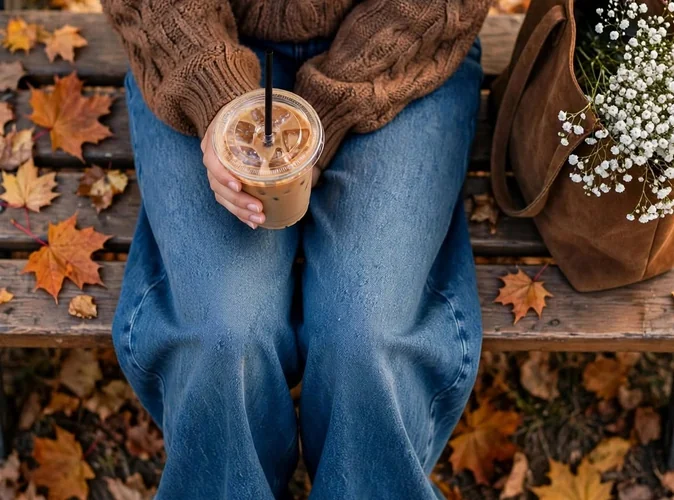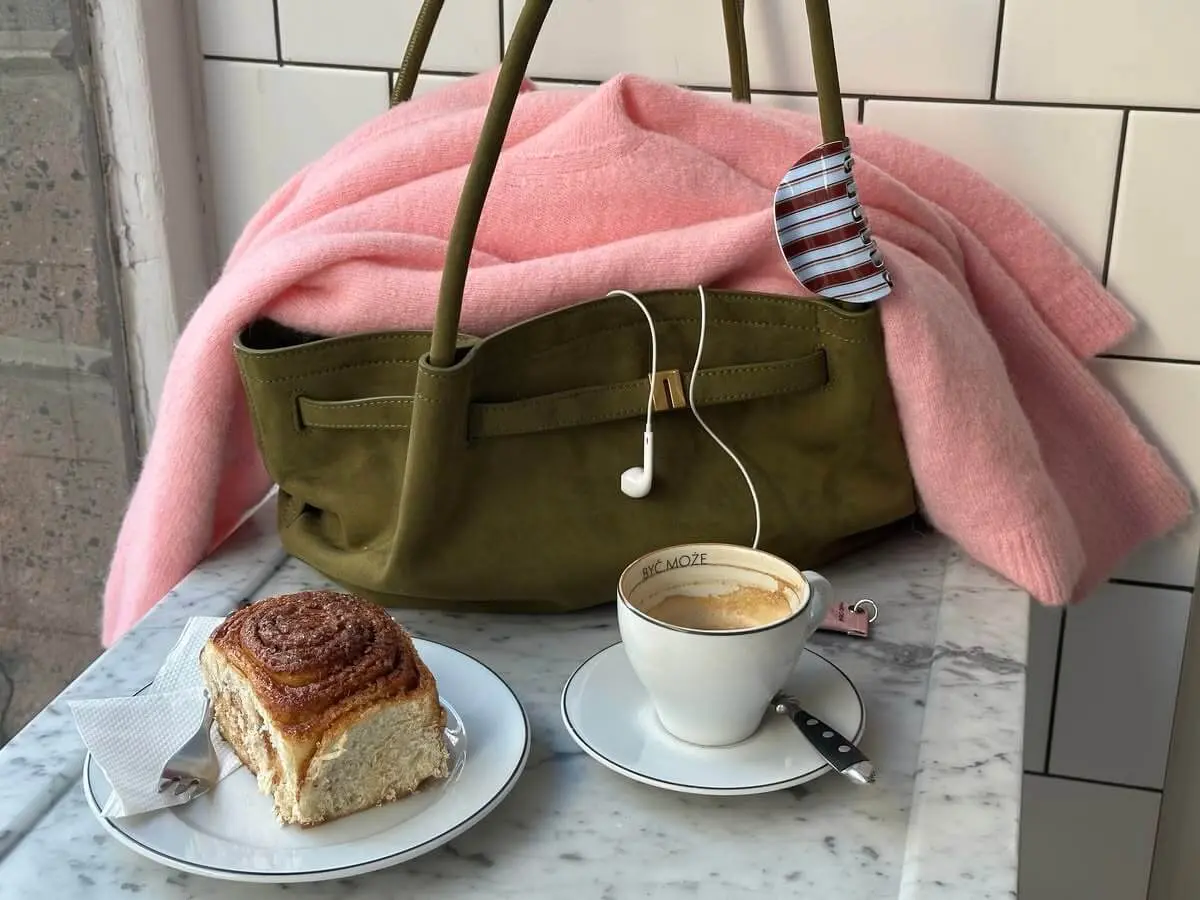

Half the women we know are dating someone in another time zone, and nobody wants to admit how much of that relationship is now mediated by objects. A sweater kept unwashed. A playlist. A bracelet that buzzes at 2 a.m. The romance of distance has become a design problem, and we are solving it with our senses.
The Return of the Keepsake, Reimagined
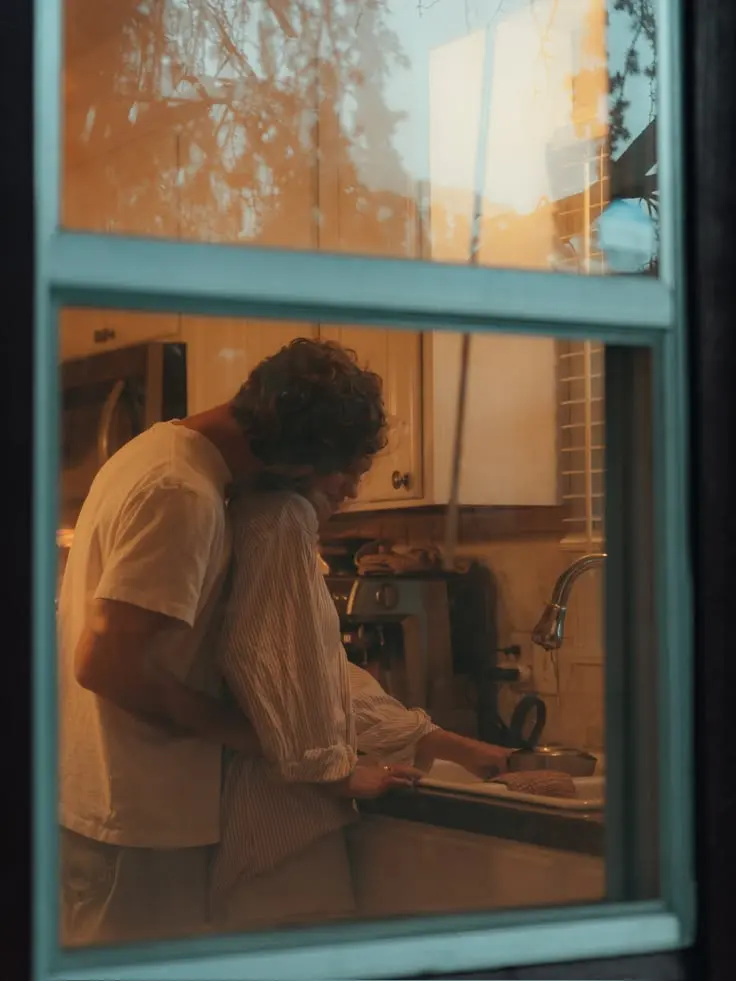
Our grandmothers had lockets. We have hoodies that smell like someone else’s apartment, linen scrunchies left behind on purpose, a single earring kept in a dish by the bed. What’s shifted is not the sentiment — it’s the self-awareness. Women in their thirties are curating these objects the way a stylist builds a mood board, fully aware they are performing intimacy for themselves.
There is something very 2024 about this. We have accepted that love across cities, countries, or continents requires props. The stigma around long-distance has thinned; the aesthetic language around it has thickened. Instagram is full of flat-lays captioned “what he left behind” — a watch, a book, a half-burned Diptyque candle.
The keepsake is no longer passive. It is chosen, placed, photographed, and lived with. And the women doing this are not naïve romantics. They are style-literate adults who understand that a well-worn t-shirt on a linen chair is both a feeling and a composition.
Why We’re Dressing the Absence
Fashion has always been about who sees us. Long-distance love complicates that — the person we most want to be seen by is not in the room. So the dressing turns inward, or outward toward the object itself.
Consider what’s trending in the corners of style that take this seriously:
- Signet rings engraved with coordinates instead of initials
- Two-tone cashmere scarves sold as pairs, one for each person
- Fragrance layering kits from brands like Le Labo designed to be split between two homes
- Hand-blown glassware sold in sets of two, one shipped to each address
None of this existed as a category five years ago. It exists now because the market finally admitted that modern love is often geographically inconvenient, and that women want beautiful things to hold the space.
Wearable Tech That Behaves Like Jewellery
The most interesting shift is in the technology itself. For years, “connected jewellery” meant a plastic fitness band pretending to be a bracelet. The newer wave is sculptural, tactile, and designed by people who clearly care about how a piece sits on the wrist.
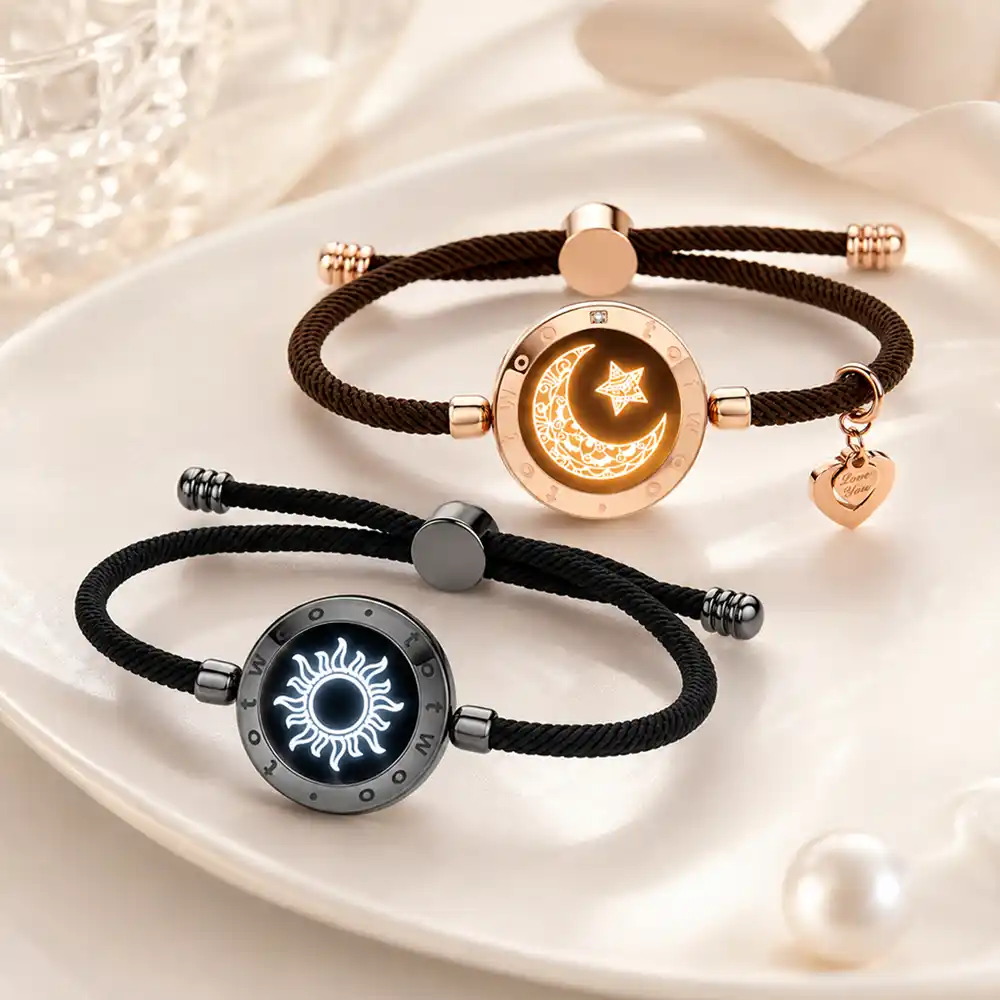
A good case study: the Sun & Moon Touch Bracelets with Milan Rope from totwoo, in black and brown. Two bracelets, one worn by each person — tap yours and the other pulses, wherever they are in the world. It reads as jewellery first, signal second, which is exactly the right order.
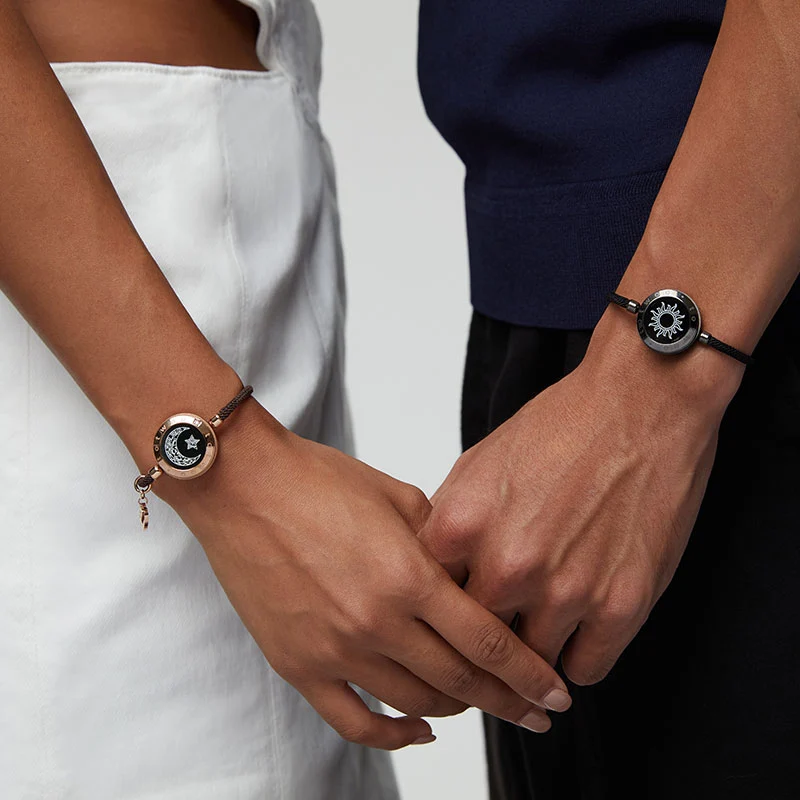
This is what wearable tech should have been all along: an object that carries feeling without announcing itself as a gadget. The sun and moon motif is literal, but the design restraint is what makes it work on a wrist that also wears a vintage Cartier.
The Soft Infrastructure of Being Apart
Beyond objects, there is a whole domestic grammar developing around distance. Matching bedside lamps that dim at the same hour. Shared Spotify sessions. Film cameras passed between two cities, one roll, two photographers. Framebridge has quietly become a long-distance love brand because couples are mailing each other prints and getting them framed on arrival.
The most romantic thing about modern distance is how much thought it demands. You cannot phone it in. You have to design it.
What this says about us: we are a generation that grew up being told presence was everything, and we are discovering that absence, handled with care, can be its own kind of presence. Not a substitute. A different texture entirely.
What This Moment Really Means
Long-distance love used to be framed as a holding pattern — something to endure until real life resumed. That framing is dead. For women building careers in one city while loving someone in another, distance is not a pause. It is the shape of the relationship, and increasingly, the shape of the life.
The sensory objects we’re gathering around this — the bracelets, the scarves, the twin lamps, the shared scents — are not coping mechanisms. They are the material culture of a love that refuses to shrink itself to fit a single zip code. Peak&Pick has been tracking this shift across jewellery, fragrance, and home for a while now, and the pattern is consistent: beauty is doing the heavy lifting that proximity used to do.
For more on the objects shaping how women live and love now, visit Peak&Pick.