By Annika Cruz, former Division I golfer at Seattle University
For most of my life, golf had a place on my calendar before almost anything else. I grew up playing, and as a Division I golfer at Seattle University, my days had a familiar rhythm: classes, practice, competition, repeat.
After graduation, that rhythm changed. Starting my working life meant learning how to manage new responsibilities, and suddenly, something I had spent years doing required a conscious effort to fit in.
I still wanted to play. I wanted to compete again, too. But between work and everything that comes with building a life after college, it became easy to leave golf for another day.
Coming back to it has made me ask a bigger question: when did making time for something I love start feeling optional?
When your calendar fills up, what gets left out?
You do not have to be an athlete to recognize that feeling. Maybe there is a book sitting half-finished on your nightstand, a tennis racket collecting dust, or a creative project you keep promising yourself you will return to.
Work takes priority. Then come errands, plans, and the small tasks that somehow fill an evening. By the time you have a moment to yourself, scrolling feels easier than getting started.
As a young woman finding my footing after college, I want to build a career and show up for the people I care about. I also want a life with room for interests that belong to me.
For years, being an athlete helped shape who I was. Returning to golf lets me carry that part of myself forward while making space for who I am becoming.
Creating time for yourself starts small
I used to have a schedule built around practice. Now, I have to create that space myself.
That means being realistic about what fits. Some weeks, a longer round works. Other weeks, a short practice is enough. If I keep waiting until I can give golf an entire afternoon, I will miss plenty of smaller opportunities to enjoy it.
The same applies to any hobby. Twenty minutes of reading is time spent with a story you love. A short walk is a chance to step outside. You can begin with the time available today.
I am learning to choose a time and give it a place on my calendar before the week fills up.
Getting back into the swing of things, at your own pace
Returning to something you once did regularly can feel surprisingly intimidating. You remember what you could do, and it is tempting to expect that version of yourself immediately.
Here is how I am easing back in:
- Make the first step easy. Choose something manageable: a small bucket of balls, a few pages, or a familiar walking route. Give yourself a reason to begin.
- Schedule a specific window. “Sometime this week” is easy to postpone. Pick a time that fits your actual routine and plan around it.
- Meet yourself where you are. Your schedule, energy, and ability may have changed. Let your starting point reflect your life now.
- Choose one intention. I might work on distance control or simply enjoy being outside. Knowing what I want from a session helps me leave feeling satisfied.
- Notice what makes you want to return. A good shot, an interesting chapter, a conversation on a walk—pay attention to the moments you enjoy. They make the next outing easier to choose.
My favorite fall escape: nine holes in sweater weather
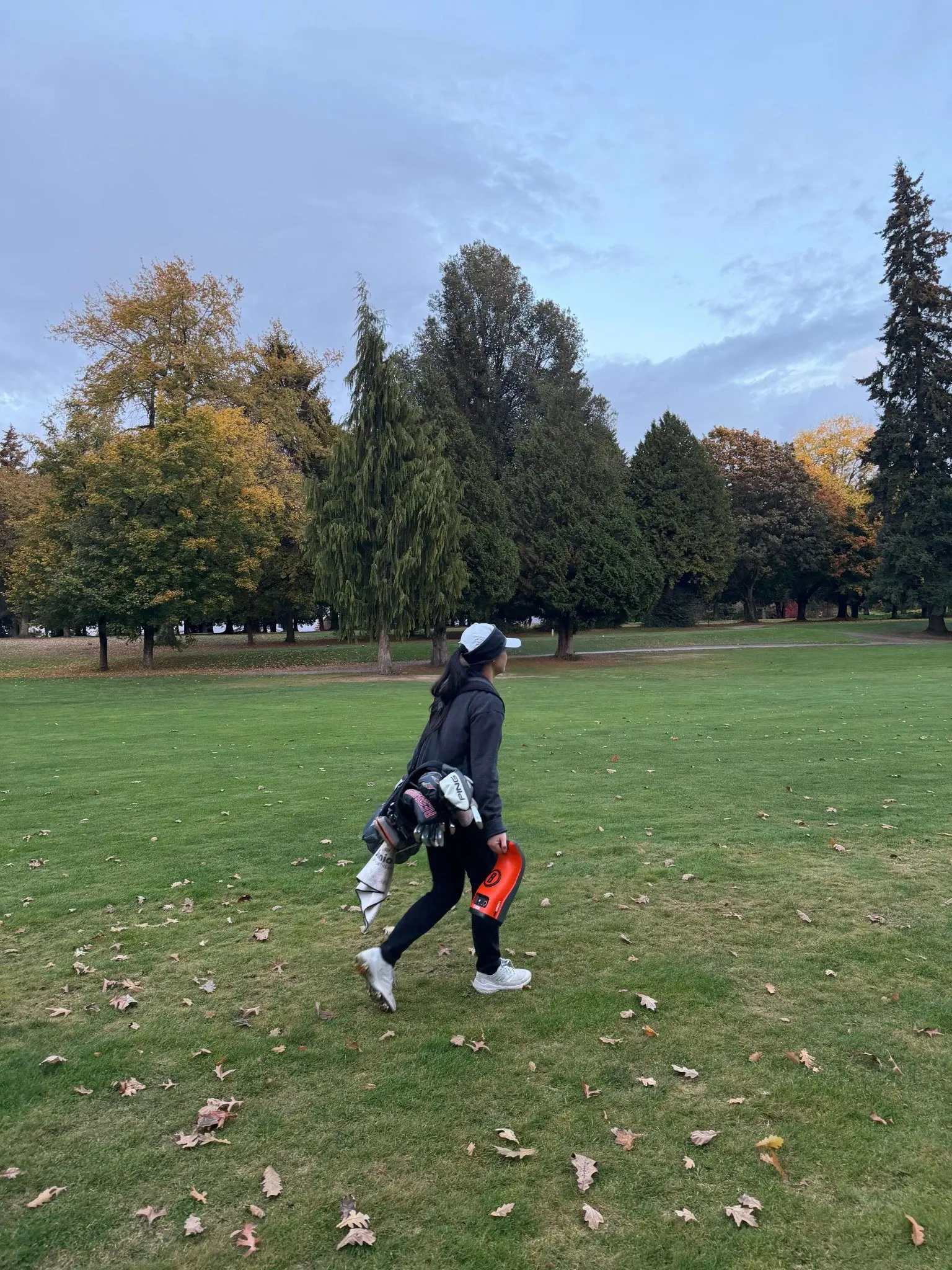
For me, a nine-hole round is one of the best ways to make that time.
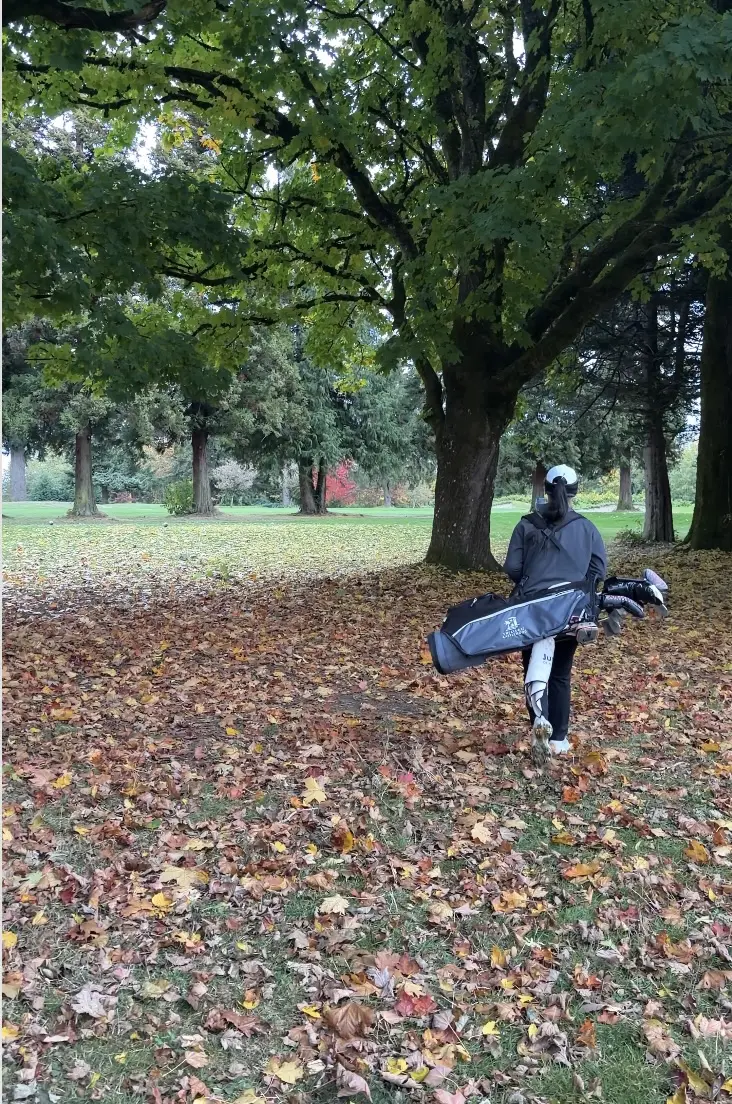
Fall is my favorite season to play. I love the cooler air, an extra layer, and the changing colors around the course. There is pleasure in those details before I have even taken a swing.
Nine holes feels like a manageable commitment alongside work. It gives me time to settle into the game, find a rhythm, and enjoy the walk between shots.
Golf also asks for my attention in a way I appreciate. I have a target to consider and a shot to commit to. For a little while, my thoughts have somewhere else to go besides tomorrow’s to-do list.
I want to get better, but I want to remember these parts of the experience, too.
Making the time count
Wanting an escape and wanting to improve can go together. I love getting outside for a relaxed nine holes, but the competitive side of me is still there. As I work toward competing again, I want the time I spend practicing to have a purpose.
Golf is a game of small margins. Sometimes, inches separate a putt that drops from one that stays out. Learning to pay attention to those details was a big part of being a Division I athlete, and it still shapes how I approach my game.
A clearer picture of the shot ahead
On the course, I use the Tour Hybrid Bushnell rangefinder with slope-adjusted distance to help me make more informed club choices. The distance to the flag is only part of the picture: an uphill approach can play longer, while a downhill shot can require less club.
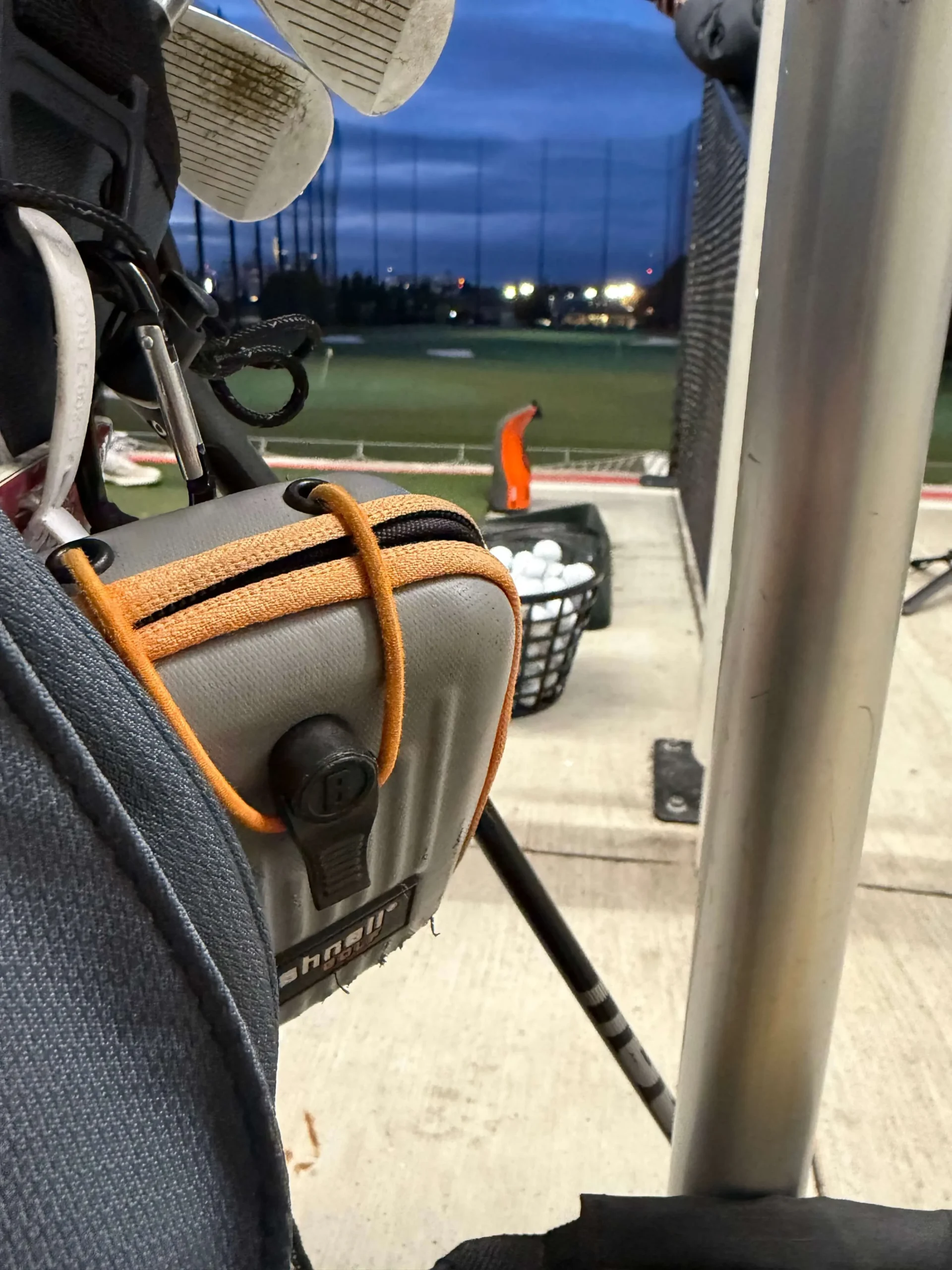
Having that adjusted yardage gives me a clearer starting point. I can consider the elevation change alongside the wind, my lie, and how I am hitting the ball that day. It helps me commit to a decision instead of standing over a shot still questioning my club choice. During competition, I switch slope off.
Understanding the numbers behind the swing
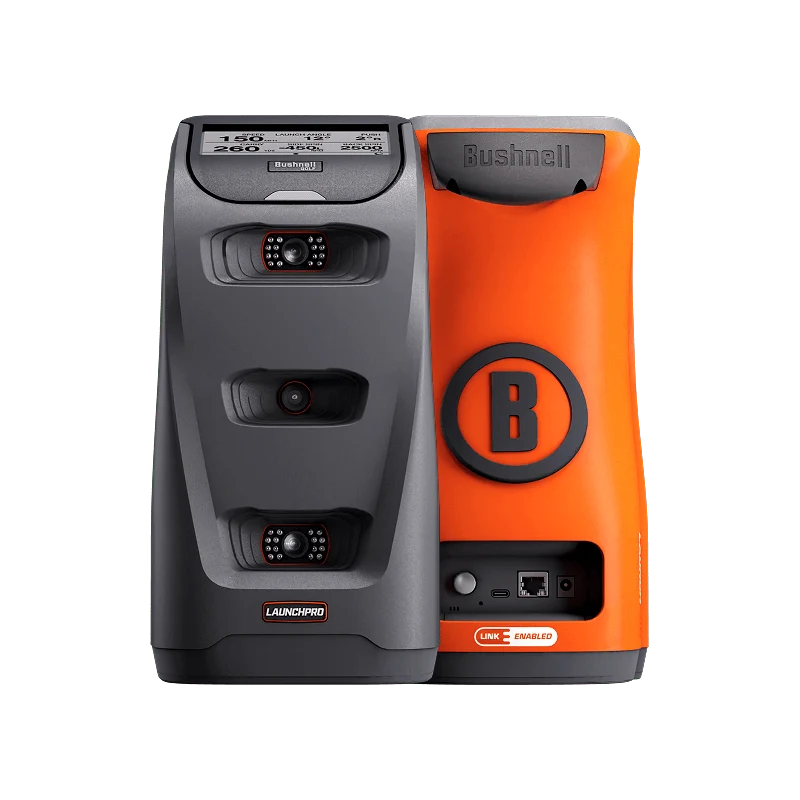
For focused practice, I use the Bushnell Launch Pro to help dial in my launch angle and spin. A shot can feel good coming off the club face, but I also want to understand how it is launching and whether I am producing consistent results.
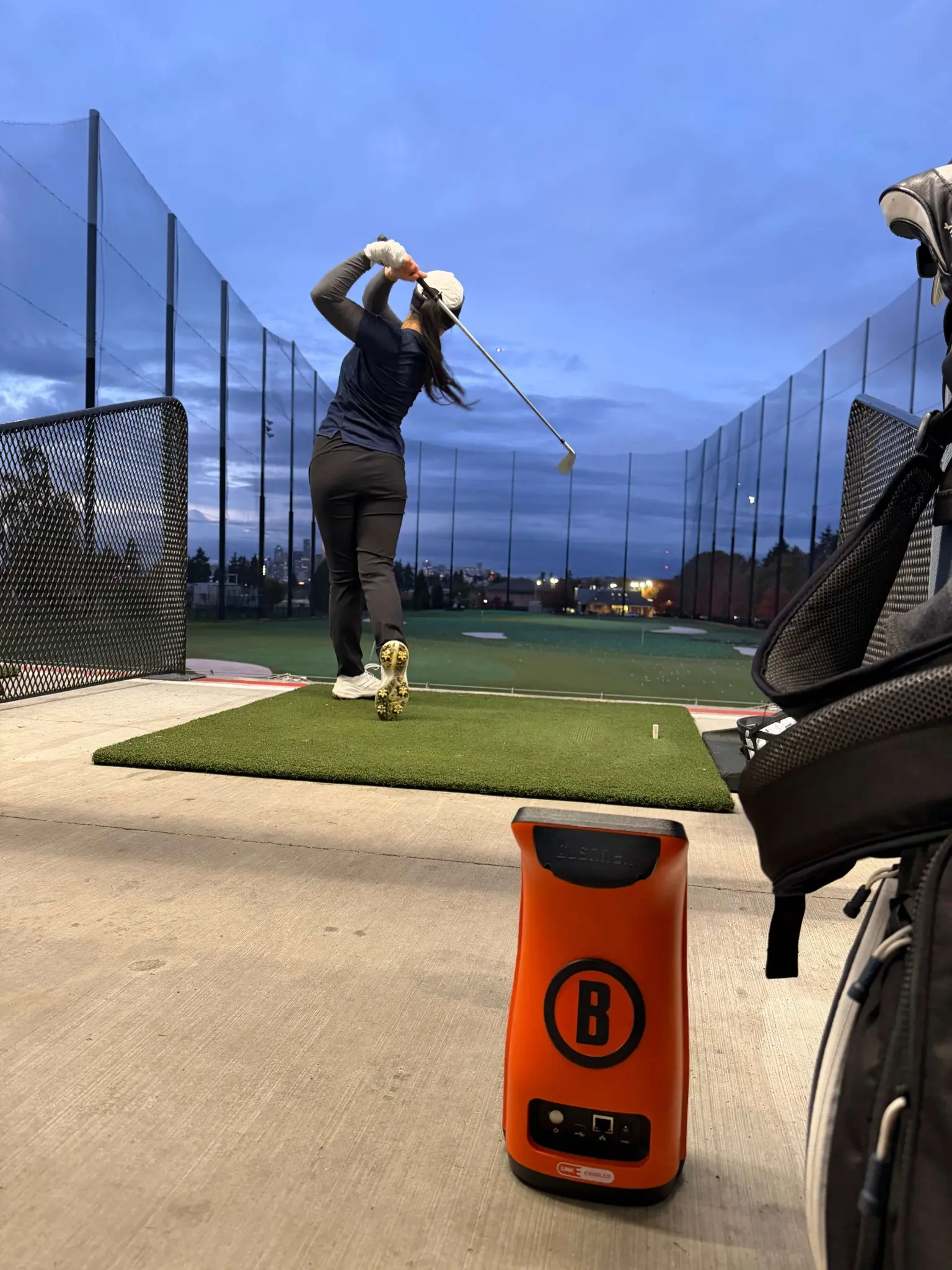
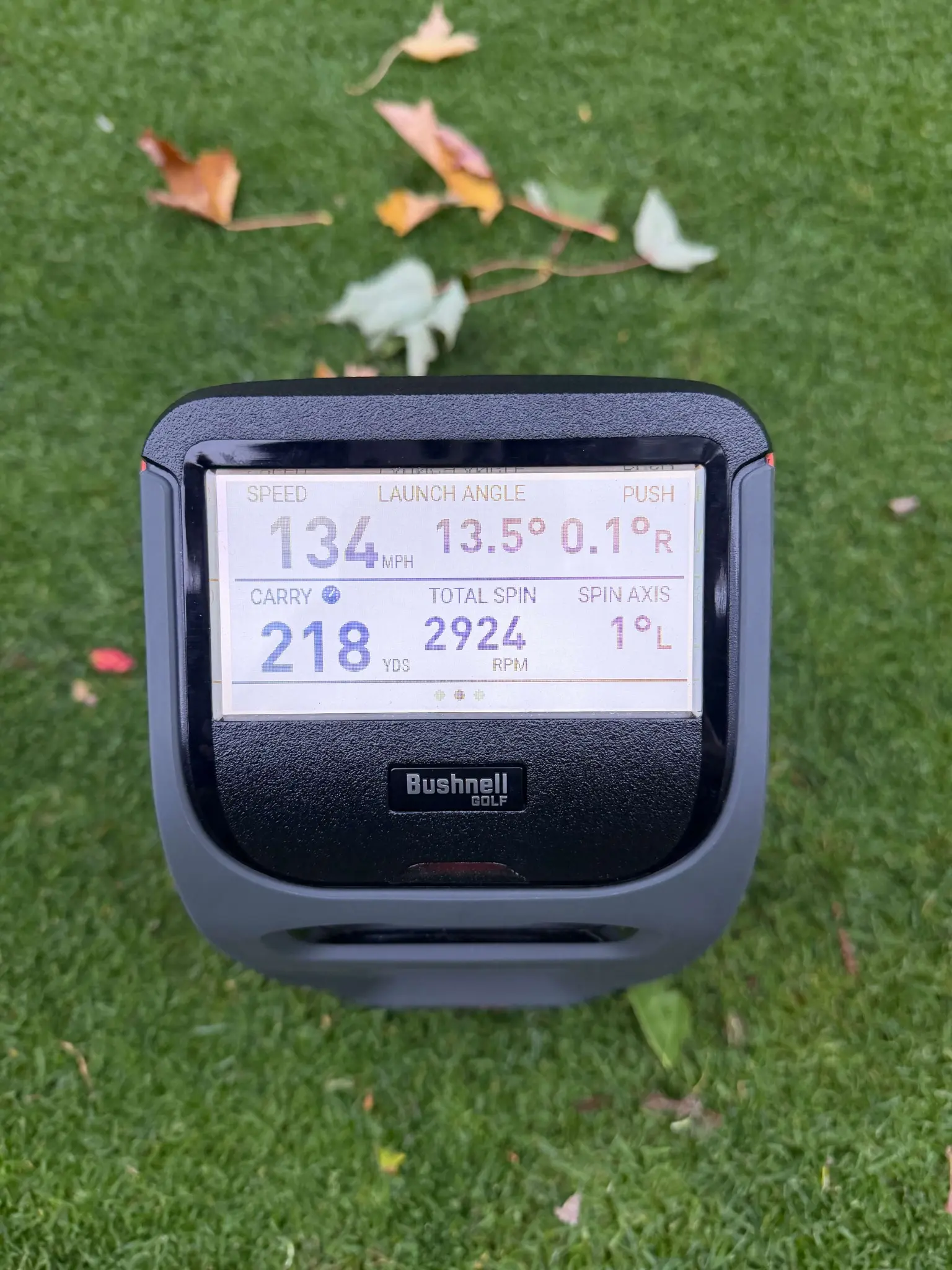
That matters to me as the weather gets colder. Cooler conditions can affect distance, so I do not want to assume my summer yardages will carry straight into fall. Looking at launch, spin, and carry together gives my practice more direction and helps me build a better understanding of my game.
Rather than trying to change everything at once, I can choose one focus—like making my wedge shots more consistent—and use the feedback to see patterns across several swings. As an athlete, that is the kind of thoughtful practice I value.
Bringing the course indoors
One of my favorite ways to keep playing when life gets busy—or the weather turns—is hitting into a net indoors with my launch monitor and the connected app. Even when I cannot get to the course, I can make time for a focused session and see more than just a ball disappearing into a net
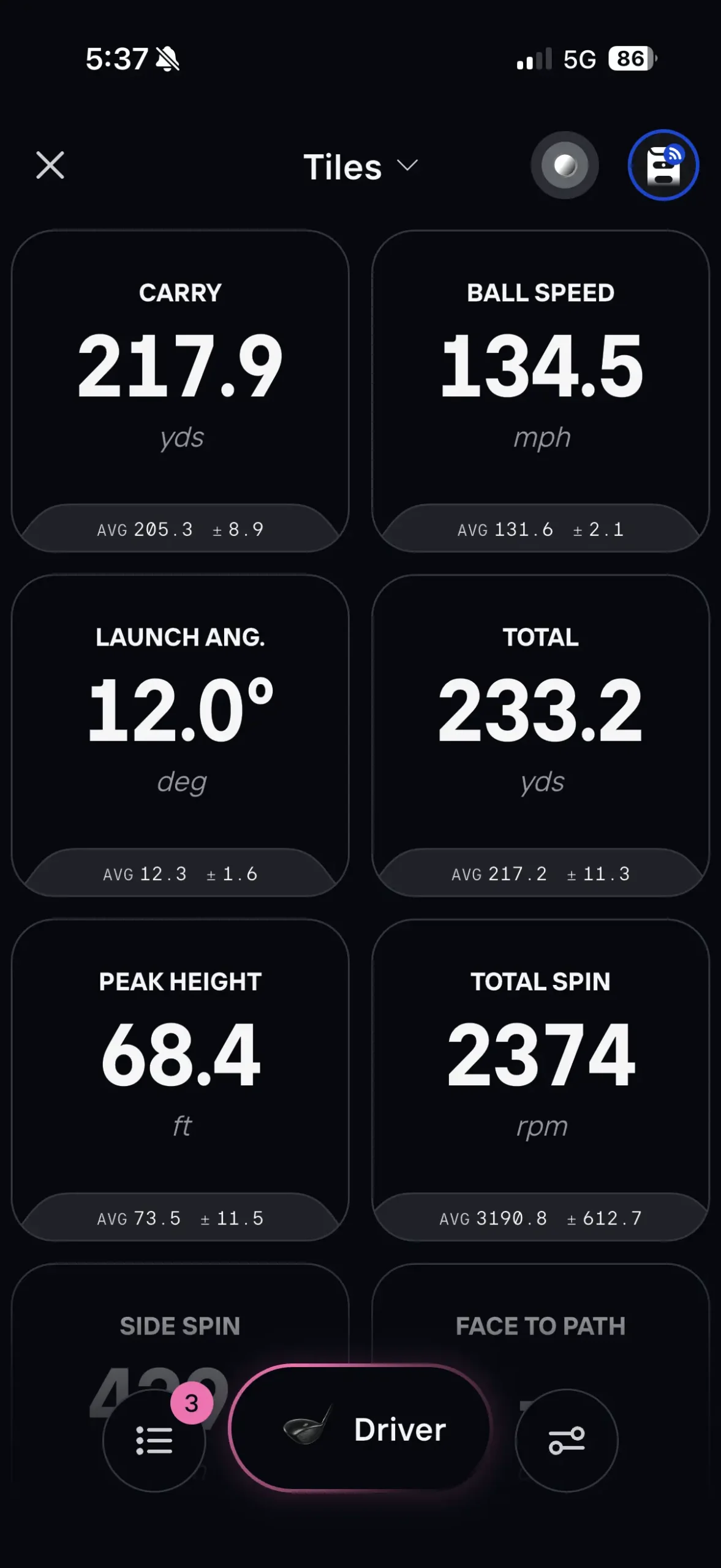
The data gives each swing context. I can look at launch angle, spin, and carry distance alongside how the shot felt, then watch for patterns. As I work toward competing again, that feedback helps me practice with a clear intention and understand where I need to improve.
When I want to bring more of the game into a session, virtual course play adds another dimension. With compatible simulation software and course access, I can choose targets, change clubs, and think through the next shot as I would during an outdoor round. It gives the practice a rhythm and a little of the challenge I love about being on the course.
That flexibility makes it easier to keep golf in my week. Sometimes, creating time for myself looks like nine holes outside. Other days, it is a net, a few clubs, and a purposeful practice indoors.
What’s your escape?
You might find that same sense of focus in swimming, baking, gardening, or a book you cannot put down. The activity is personal. What matters is giving yourself the opportunity to enjoy it.
I am still figuring out the balance between work, ambition, and time for myself. Golf is helping me do that, one practice session and one nine-hole round at a time.
Think about something you have missed doing. What would it take to make a little room for it this week?
For me, it is a tee time, a sweater, and a chance to get back into the swing of things.