
If you live where it rains nine months of the year, the honest Muckboot Review verdict is this: these are the boots that keep showing up in the mudroom rotation long after the others get retired. We say that as a team based in the Pacific Northwest, where wet feet are a weekly conversation and boot opinions are strong.
Soggy socks are a rite of passage here. So is the quest for a pair of boots that can handle a trip to the chicken coop, a muddy trail, and a Trader Joe’s run without feeling like a costume change.
Why the PNW Is the Toughest Boot Lab Around
Western Washington and Oregon are the real-world stress test. Drizzle at breakfast, downpour at noon, mist at dinner, and a cold snap by Thursday. Any boot that survives a full season out here has earned its stripes.
We cycle through a lot of boots at Peak&Pick because our zip codes demand it. Garden chores, dog walks on gravel paths, hoop house weeding, farmers market mornings — each one asks something slightly different of a rubber boot. A pair that is fine for pavement puddles can be miserable on a slick barn ramp.
Here is what the wet-weather lab has taught us over the years:
- Fit around the calf matters more than you think. Too tight and you cannot tuck jeans in; too loose and water sneaks down the shaft.
- Traction wins the day. A lug pattern that sheds mud is the difference between a quick coop check and a slow-motion slip.
- Insulation is a spectrum. A boot that feels toasty in November can be sweaty in a mild April.
- Weight adds up over a long chore list. Lighter rubber compounds have quietly gotten much better.
What a Good Garden Boot Looks Like in Practice
A good garden boot disappears on your feet. You stop noticing it, and you start noticing the dahlias instead. That is the test.
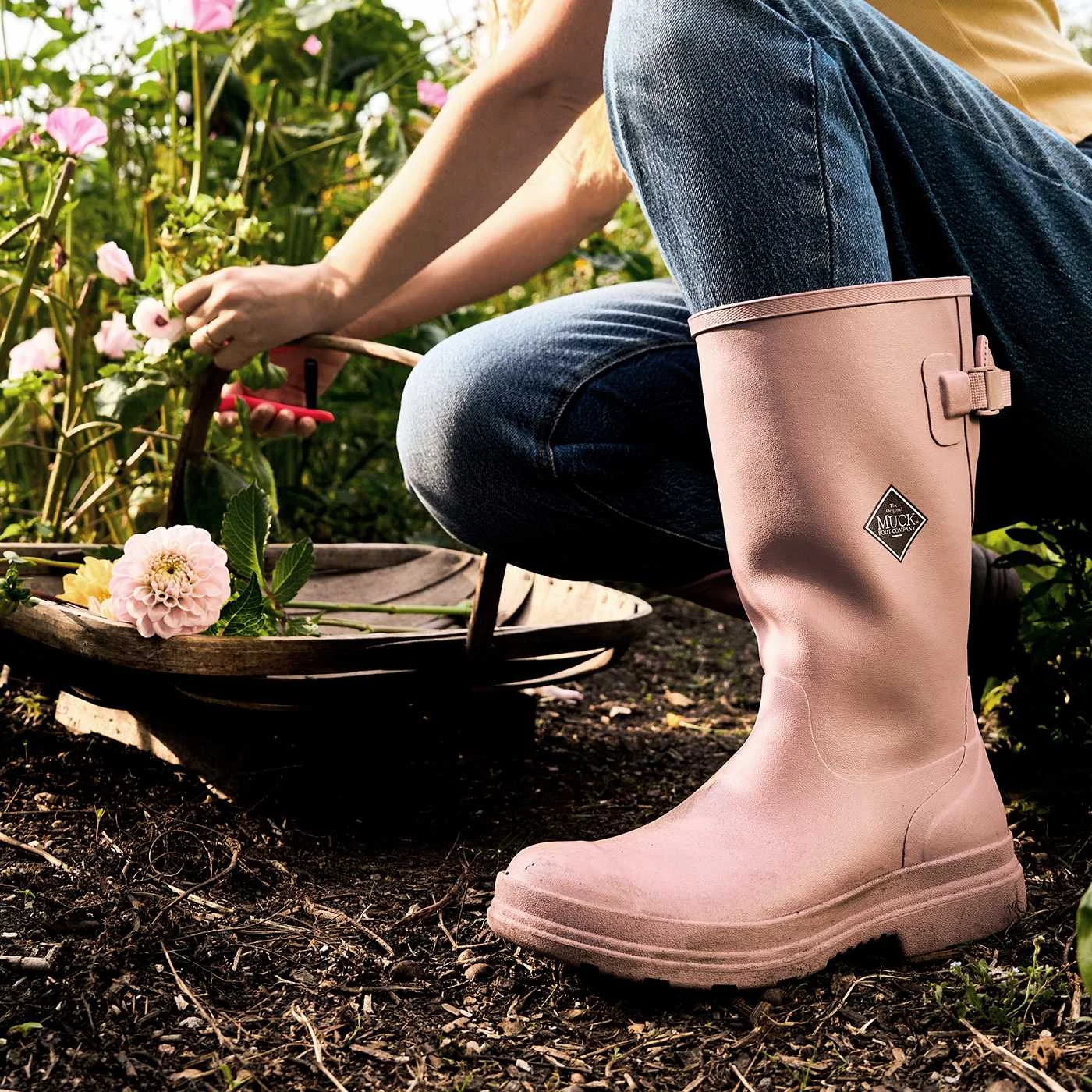
The tall, dusty-pink pair we have been admiring lately is a great example of how far women’s rubber boots have come. The shape is roomy enough for thick socks but still trim through the foot, and the adjustable gusset at the back of the calf is the detail that makes tucking slim jeans actually work. The matte finish hides scuffs better than glossy rubber ever did.
Little things we look for in a garden-ready boot:
- A pull-on shape with a reinforced heel kick so you can get them off at the door.
- A calf strap or gusset for a cleaner fit.
- A sole stiff enough to push a shovel without bruising your arch.
- A color you actually like, because you will wear them more.
What You Actually Need Before You Head Out
Before a wet-weather chore run, we keep the checklist short: wool socks, a dry base layer, gloves that fit, and boots that can handle whatever the forecast is lying about.
For cold, serious weather — the kind where frost lingers past 10 a.m. and the pasture is half-frozen mud — the Muck Boot Arctic Pro Insulated Boot from The Original Muck Boot Company is the pair women keep reaching for. It is built for staying warm and stable on winter terrain, from slushy driveways to snowy farm paths, with a tall shaft that handles deep puddles without complaint. If you only own one cold-weather boot, this is a strong candidate.
Round out the kit with:
- A pair of merino socks (midweight for most days, heavyweight when it drops below freezing).
- A short rain shell with a hood that actually covers a ball cap.
- A boot tray by the door so the floor stays sane.
- A stiff brush for knocking off mud before it dries into concrete.
Boots the Whole Family Can Rally Around
Rubber boots are the one piece of PNW gear everyone in the house ends up needing. Kids especially. The chicken coop does not care that someone is five years old and wearing sneakers.

That is the sunny-day scene most PNW families recognize: a rare dry afternoon, kids checking on the flock, and a quick mental note that next time, he really does need boots. Kid-sized rubber boots last longer than you expect because they grow out of them before they wear them out, so hand-me-downs are a real thing in PNW neighborhoods.
A few family-kit pointers we have picked up:
- Size up a half for growing feet and thicker socks.
- Choose bright colors for little kids — easier to spot across the yard.
- Keep a spare pair at grandma’s house if she has acreage.
When You Need Something Lighter: XTRATUF Ankle Deck Boots
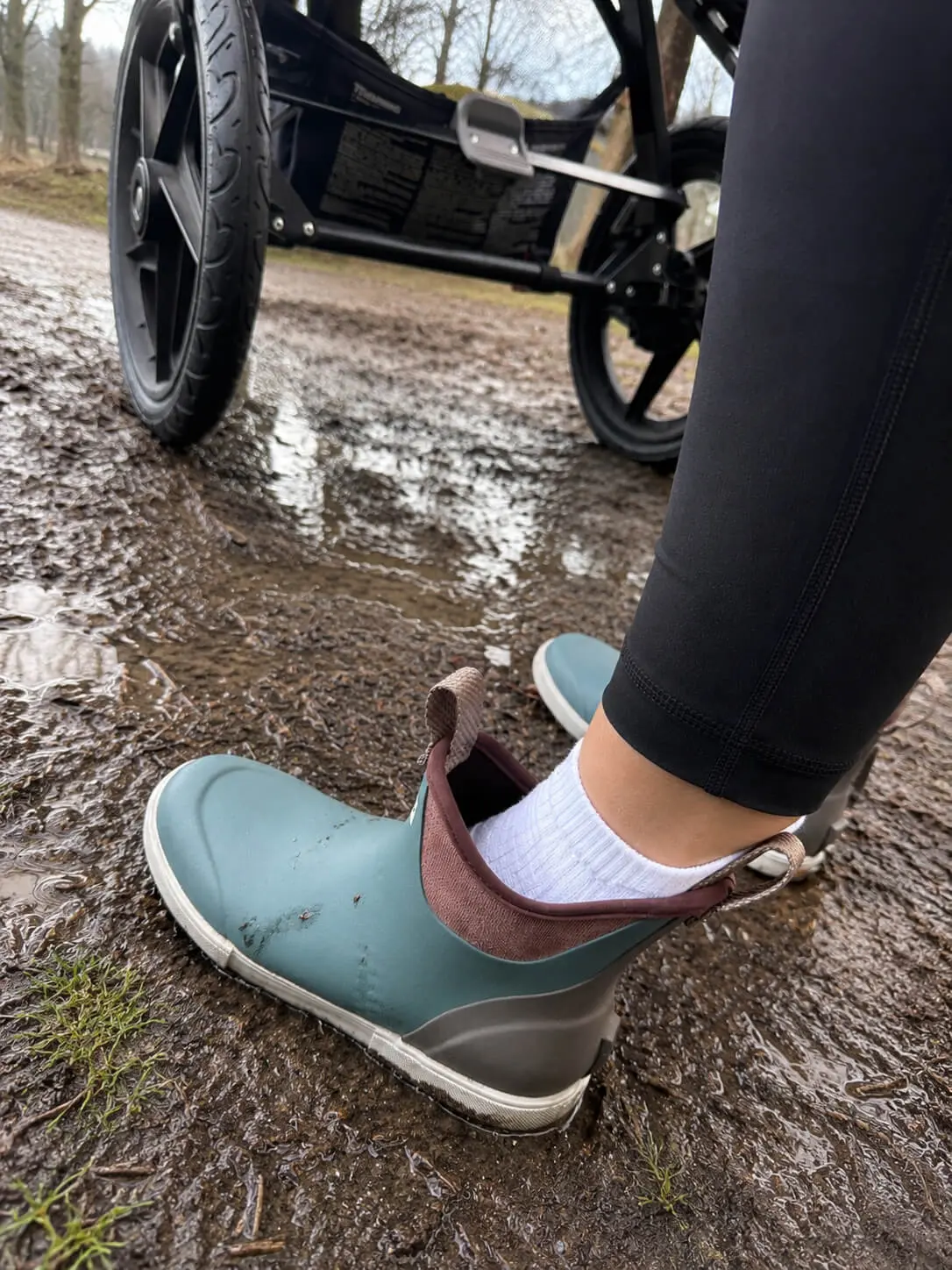
Not every rainy PNW day calls for a tall rubber boot. Sometimes you’re heading to the farmers market, walking the dog along the waterfront, or running errands between passing showers. That’s where a shorter waterproof boot can come in handy.
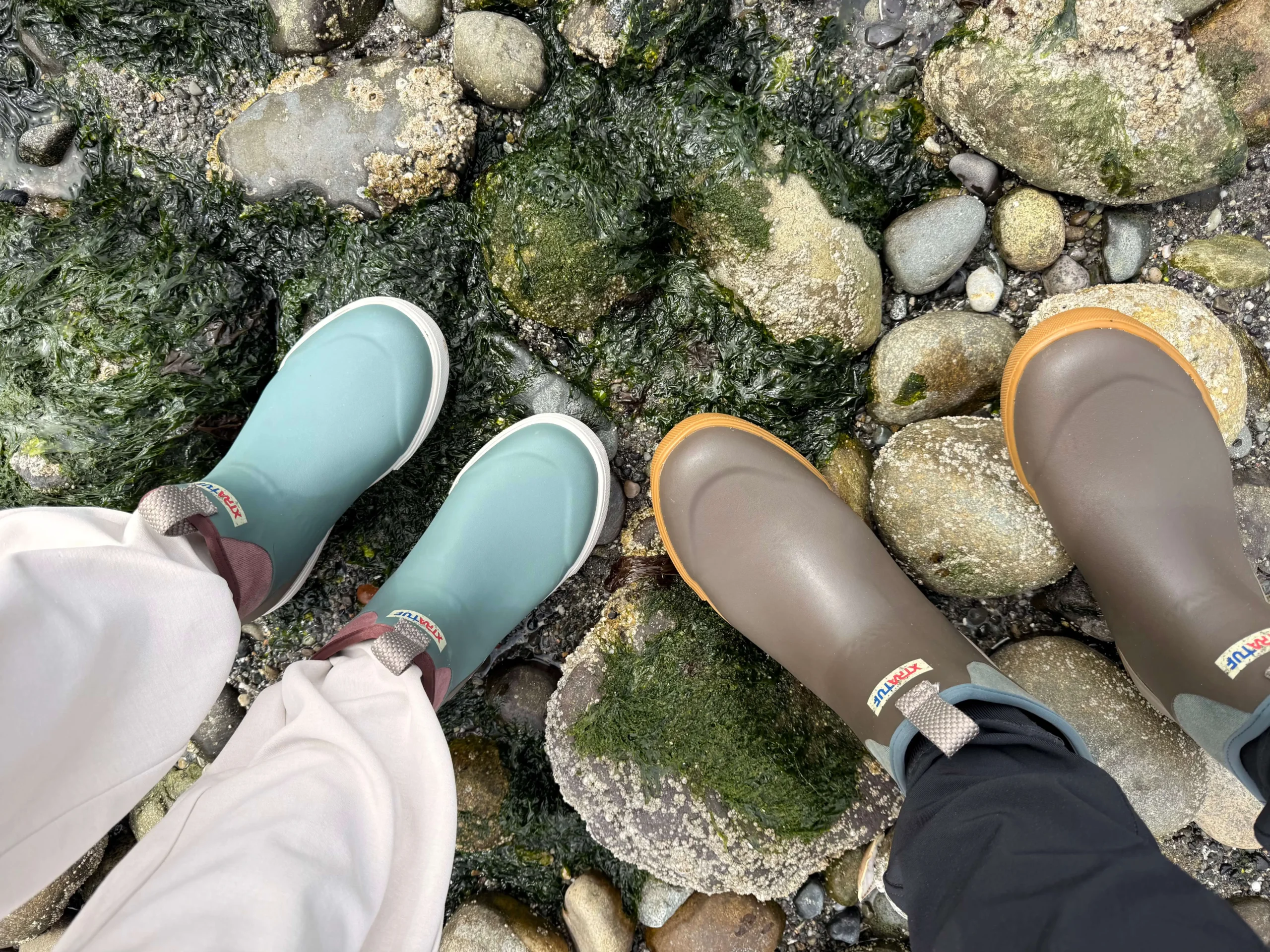
XTRATUF’s Ankle Deck Boots are worth considering for those everyday outings. Originally designed with life on the water in mind, their waterproof construction, slip-resistant outsoles, and easy pull-on design make them an appealing option for coastal living and rainy-day routines.
The biggest difference comes down to coverage. While taller Muck Boots are better suited for deep mud, gardening, and messy outdoor chores, XTRATUF ankle boots offer a lower-profile alternative when you don’t need as much protection around your calves.
They’re also easy to style with jeans, leggings, or casual outdoor layers, making them a practical option for days that involve a little of everything.
For a closer look at their fit, comfort, and everyday versatility, read our XTRATUF Ankle Deck Boots Review to see how they fit into a Pacific Northwest wardrobe.
The Honest Takeaway After Many Rainy Seasons
A Muckboot Review from this corner of the country comes down to one quiet truth: the pair you grab without thinking is the pair that earned it. After many wet seasons, Muck keeps earning that grab.
Pick the pair that matches your climate and your chores, break them in on a short walk, and let the rain do what it does.