
The hairline is the last frontier of beauty, and we’ve been treating it like a rumor. We spend $600 on brow lamination, $80 on lip liner sets, and then pretend the strip of skin between our forehead and our roots is doing just fine on its own.
It isn’t. And we know it isn’t.
The Face Frame We Refuse to Talk About
Walk into any Sephora and count the hairline products. We’ll wait. There’s an entire wall for brows, another for lashes, a full ecosystem for lips. The hairline gets a dry shampoo and a prayer.
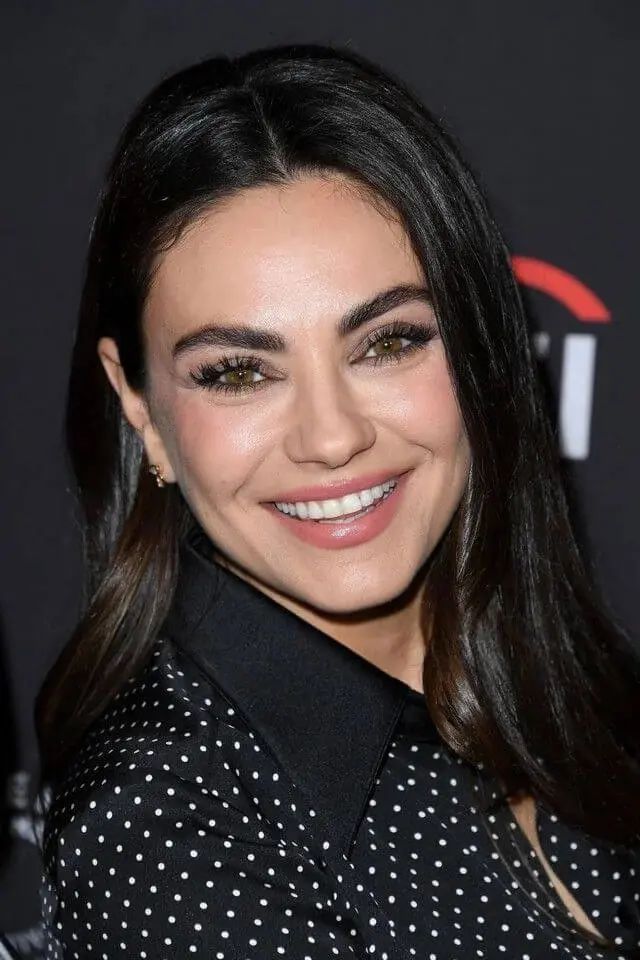
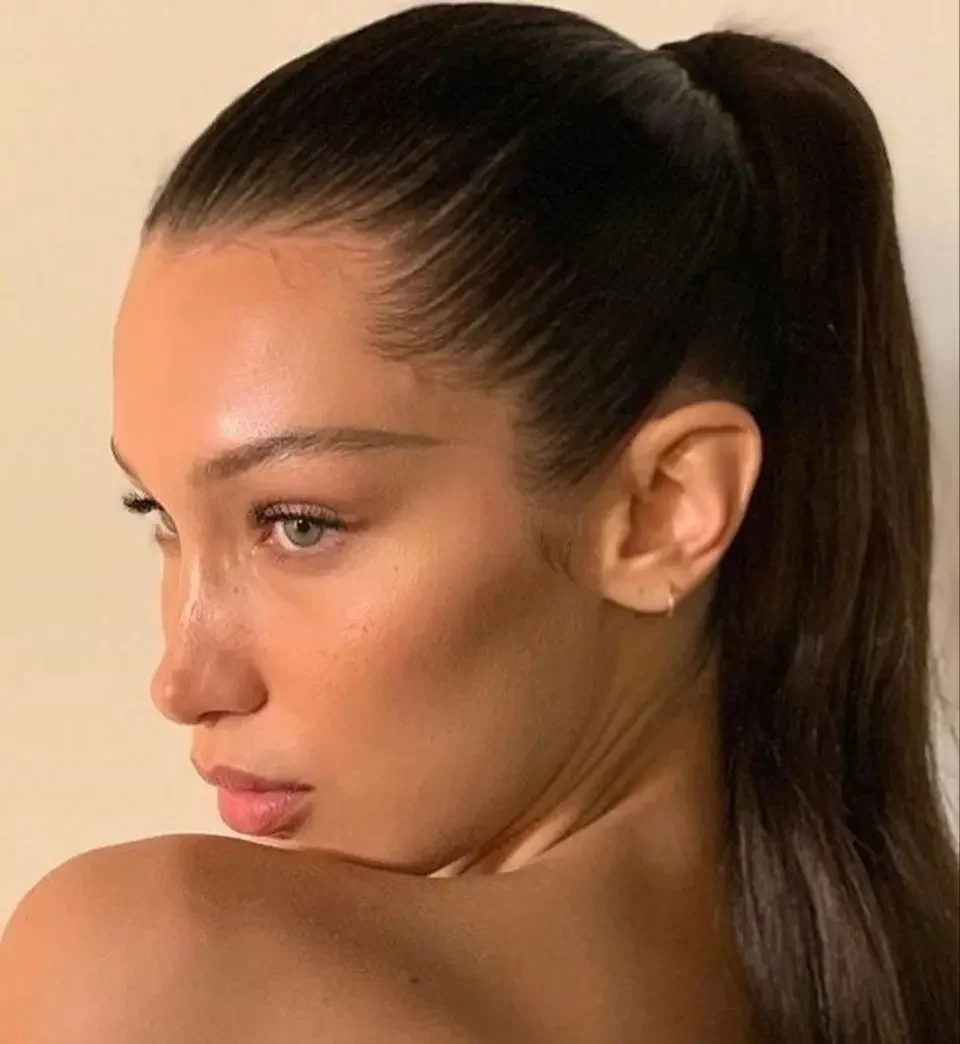
This is odd, because the hairline does more heavy lifting than almost any other feature. It shapes the face. It signals age. It’s one of the first things a slicked-back bun exposes, making the shape and finish of the hairline much more noticeable.. Ask any makeup artist working a red carpet — Pati Dubroff, Mary Phillips — and they’ll tell you the hairline gets powdered, filled, and sculpted before the base coat is set.
Yet at home, we don’t touch it. Partly because hairline styling has never received the same beauty treatment as brows, lashes, or lips. For years, uneven edges and less-defined areas were simply treated as something to work around rather than another feature you could style.
Meanwhile we’re microblading hair onto our foreheads in the form of eyebrows. The logic isn’t logic-ing.
Why the Hairline Became a Cultural Blind Spot
Beauty culture rewards features you can enhance without admitting there’s anything to fix. Brows? Fashion. Lips? Fun. Hairline? Suddenly clinical, suddenly medical, suddenly a problem.
That framing did us dirty. It turned something that could easily be approached as everyday styling into a category that felt far more serious than it needed to be.
Compare that to the brow industry, which took sparse arches and turned them into a $1.6 billion global category without a single shame spiral. The difference was language. Brow gel is “styling.” Hairline products were often positioned as corrective rather than creative, which gave the entire category a very different feel.
We’re watching that shift now. TikTok’s obsession with slicked buns, baby hair sculpting, and the return of the deep side part has forced the hairline into the frame — literally. Suddenly it’s not a medical issue. It’s a styling opportunity.
The Tools Rewriting the Rules
The good news is the product category is finally catching up to the conversation. What used to be a sad little tin of powder marketed like a pharmacy afterthought is now something you’d actually want on your vanity.
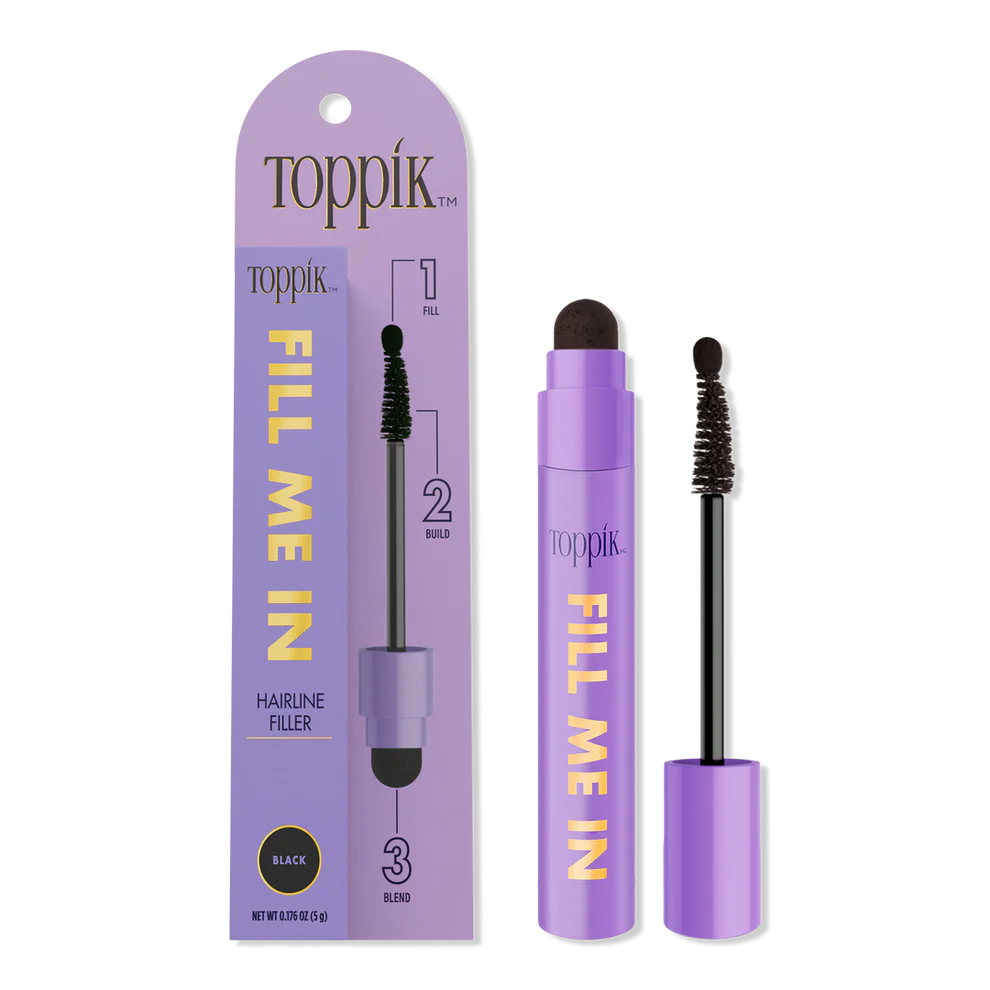
Toppik‘s Fill Me In Hairline Filler is one of the sharper examples — a 3-in-1 tool that sculpts, fills, and defines edges in a single pass, no salon chair required. It’s the kind of thing that treats the hairline like a feature to shape rather than a flaw to hide. Which, frankly, is how it should have been marketed all along.
I’ll admit I became a convert under high-stakes conditions. On my wedding day, after the updo was pinned and the veil was placed, I could see the little gaps along my hairline in every test shot my photographer took — that harsh window light picking up every wisp that wasn’t cooperating and every little area along the front that didn’t look as defined as I wanted. My bridesmaid pulled a Toppik Fill Me In out of her clutch, and we did a quick pass along my part, my temples, and the front edge right before I walked down the aisle. It took maybe ninety seconds. The photos came back and my hairline looked like it had been retouched in post — except it hadn’t. It was just the filler doing exactly what it was designed to do, in real time, under real light.
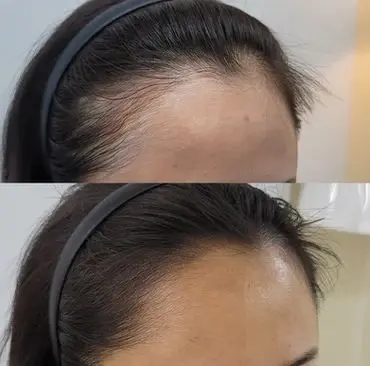
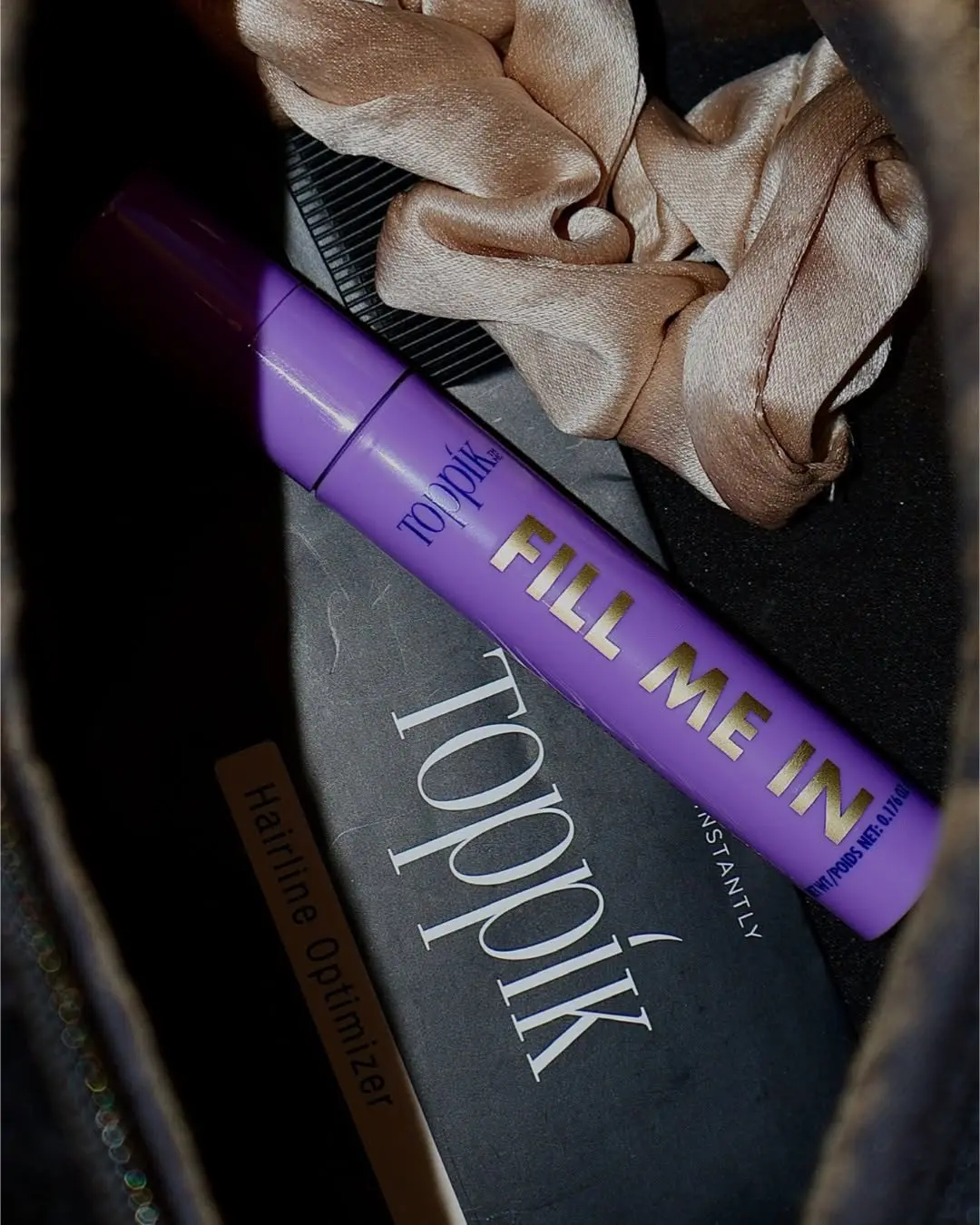
Since then it’s earned a permanent spot in my morning routine, right between my brow gel and my setting spray. I use it a few days a week — heavier passes for slicked-back bun days when everything is exposed, and a lighter tap along my part on wash days when the roots feel especially flat. On weekends I skip it entirely and let my hair breathe. It’s become one of those quiet three-second steps that changes how put-together I look without changing anything I’m actually doing.
Other names worth watching:
- Color Wow Root Cover Up — the pressed powder that basically invented the modern category.
- Boldify Hair Fibers — fibers designed to give hairstyles a fuller-looking finish.
The category is small, but it’s finally being designed by people who understand that women want options that feel cosmetic, not clinical.
What This Says About Us Right Now
The hairline moment is really a bigger moment. We’re watching the collapse of the divide between “beauty” and “problem to solve.”
For years, the industry treated brows, lashes, and lips as features to experiment with, while the hairline mostly sat outside the traditional beauty conversation.
That’s finally changing. More women are treating the hairline as part of the overall hairstyle — something that can be shaped, defined, and finished just like brows. The hairline is simply the next overlooked feature making its way into the vanity light.
The features we’re willing to discuss out loud are the features that get better products. Silence keeps categories small.
Which is why this shift matters more than any single tube of filler. We’re expanding the definition of what counts as beauty rather than what counts as flaw. At Peak&Pick, that’s the shift we watch for — the moment a whispered thing becomes a whole aisle.
The hairline is having its brow moment. It’s about time.