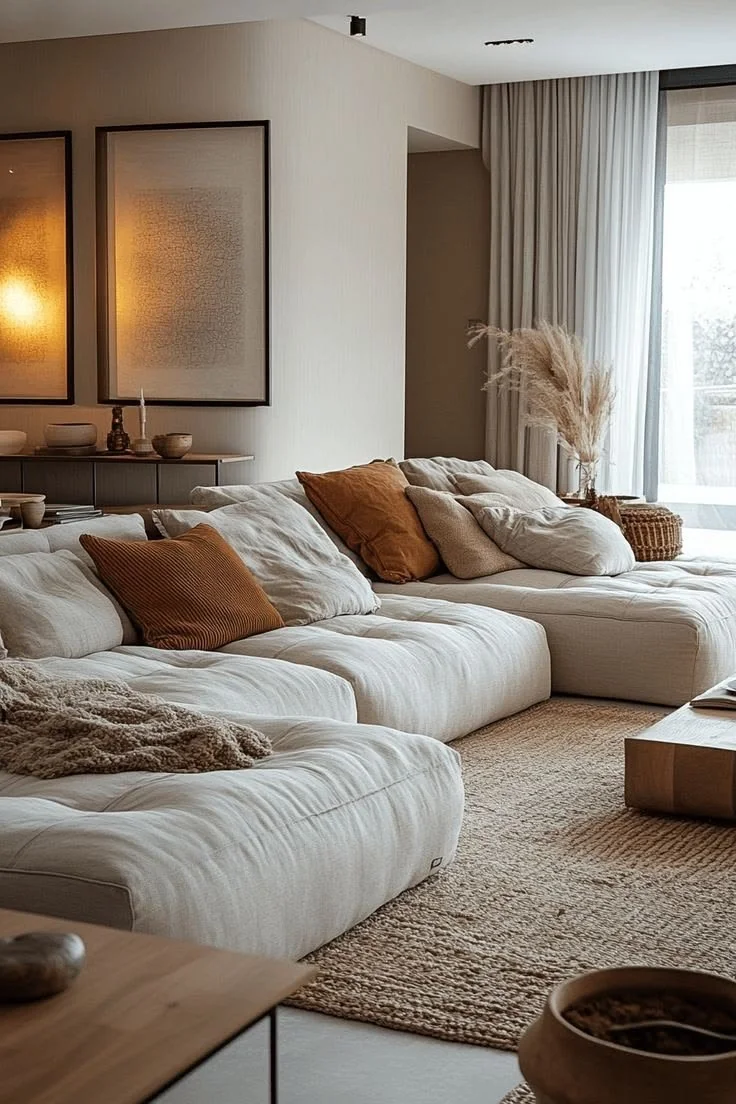

Yes, modular sectionals shipped in a box are worth it for most living rooms — if you pick one with dense foam, a washable cover and a layout you can actually rearrange. The category has gotten genuinely good, and the price gap between flat-pack modulars and traditional delivered sectionals is now big enough to matter.
The pitch is simple. A big, lounge-worthy sectional arrives in boxes a single person can drag through a doorway, assembles without tools, and can be reshaped when you move or redecorate. No freight appointment. No “sorry, it won’t fit up the stairs” phone call. For apartment dwellers, first-time homeowners, and anyone who has ever wrestled a one-piece sofa around a tight landing, that alone is the sell.
The question isn’t really whether to buy one. It’s which one, and what to look for before you click order. Below is our honest take after comparing the current crop, plus the standout we keep pointing friends toward.
What “In a Box” Actually Means in 2027
A modular sofa in a box is a sectional broken into foam-and-cover blocks — usually seat cushions, back cushions, arms and an ottoman — that ship compressed in vacuum-sealed packaging. You unbox, let the foam expand for a few hours, zip on the covers, and connect the pieces with hidden clips, straps or interlocking panels.
The appeal is practical:
- Delivery that fits through a standard door. Most boxes weigh 40–70 lbs each.
- Tool-free setup. Expect 20–45 minutes for a full sectional.
- Reconfigurable layouts. L-shape today, U-shape when you move, two loveseats and an ottoman after the next rearrange.
- Washable covers. Nearly every serious brand now offers zip-off, machine-washable fabric.
What to watch for: foam density (1.8 lb/ft³ or higher holds its shape), cover material (chenille and corduroy are having a moment, performance weaves wear best with pets), and whether the modules actually lock together or just sit next to each other hoping for the best.
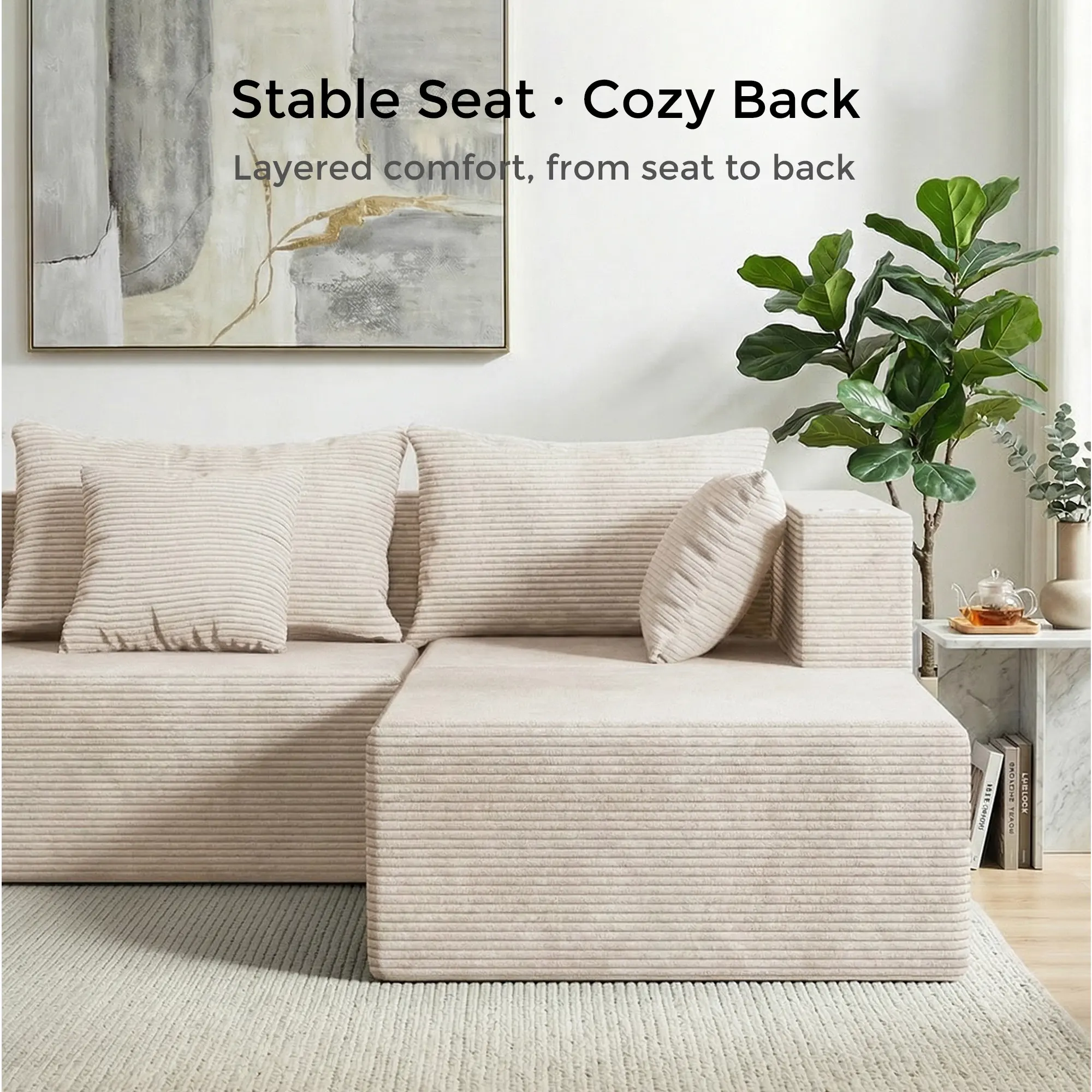
The layered-cushion construction above is what separates a flat futon-feel from a real sofa. You want a firm seat block and a separate, softer back pillow — not one flat slab pretending to be both.
Who Modular Sectionals Are Actually For
They’re a strong fit if you:
- Live in a walk-up, a building with a small elevator, or a house with a tight staircase
- Rent, or expect to move in the next few years
- Have kids, pets or a snack habit (washable covers, replaceable modules)
- Want a bigger seating footprint than your budget would normally allow
- Like redecorating and want furniture that can shift with you
They’re a weaker fit if you want a formal, structured sofa with tight tailoring, a hardwood frame you’ll pass down, or a specific antique silhouette. In-a-box modulars lean casual, plush and lounge-first. That’s the whole point.
Budget-wise, the sweet spot right now is roughly $900–$1,800 for a four-to-six-seat configuration with an ottoman. Below $700, you’re usually trading foam quality or cover durability. Above $2,500, you’re mostly paying for brand.
The Editor’s Pick: One Sofa That Checks Every Box
After sorting through the current field, the standout value is the Hestia Compressed Modular Sofa with Cup Holders & Storage by Welax. It bundles the three features most modular sofas make you choose between — built-in cup holders in the arms, hidden storage under the seats, and a fully reconfigurable layout you can set as a loveseat, L-sectional or chaise setup. The corduroy and chenille cover options land squarely in the warm oat, cream and clay palette that interior forecasters are calling for 2027, which means it’ll look current now and still look right in three years.
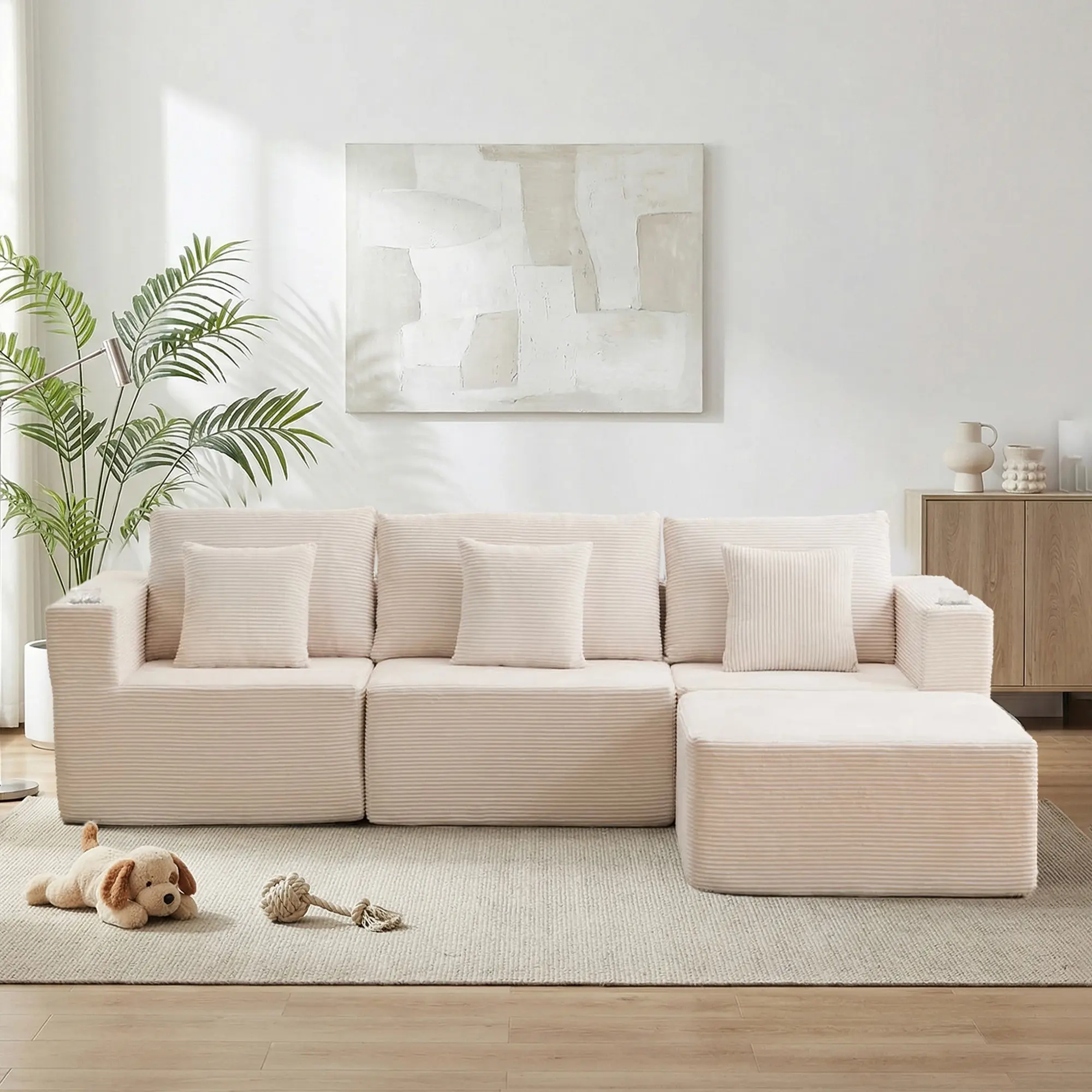
The chaise configuration pictured above is the layout most readers tell us they end up with — it anchors the room, gives one person a stretch-out spot, and still seats four comfortably. The cup holder arms are the small touch that stops being a gimmick about two days in, when you stop hunting for coasters.
A few honest notes: assembly takes about 30 minutes for the full setup, the foam needs roughly 24 hours to fully expand after unboxing, and the storage compartments are best for throws, remotes and board games rather than heavy items.
How to Pick the Right One for Your Space
Before you add anything to cart, do these five things. They take ten minutes and save a lot of regret.
- Measure your doorway, hallway and any stair turns. Even flat-pack boxes have a longest dimension. Confirm each box fits.
- Measure your room, not just the wall. Leave 18 inches of walkway on at least one side of the sofa and 14–18 inches between sofa and coffee table.
- Count your regular seats. A family of four with weekend guests usually wants a 5–6 seat configuration, not a 3-seater with an ottoman.
- Pick fabric for your actual life. Chenille and corduroy feel plush and hide crumbs well. Performance weaves clean easier if you have a shedding pet or a toddler with opinions about juice.
- Check the return window and whether returns are free. The best brands offer 30+ days and cover return shipping.
One more tip from the team at Peak&Pick: order a fabric swatch first if the brand offers one. Screens flatten color, and the difference between “warm oatmeal” and “greige” is real when the sofa is taking up half your living room.
The styling above is a good reference point for what these sofas look like when they settle in. Low profile, deep seats, soft pillows mixing a couple of textures. It’s a lounge-first look that works for movie nights and still photographs well when friends come over.
We Also Tried Monvane: Here’s What We Learned About Modular Comfort
One thing we’ve learned about modular sofas is that comfort matters just as much as convenience. A sofa can look beautiful online, but how the cushions feel, how the upholstery holds up, and whether the seating works for everyday lounging are what really make the difference.
We got to experience this firsthand when we brought a Monvane modular sofa into our 650-square-foot apartment. What initially caught our attention was the soft ivory upholstery and relaxed, low-profile design. But what impressed us most was how easily the individual sections adapted to our space.
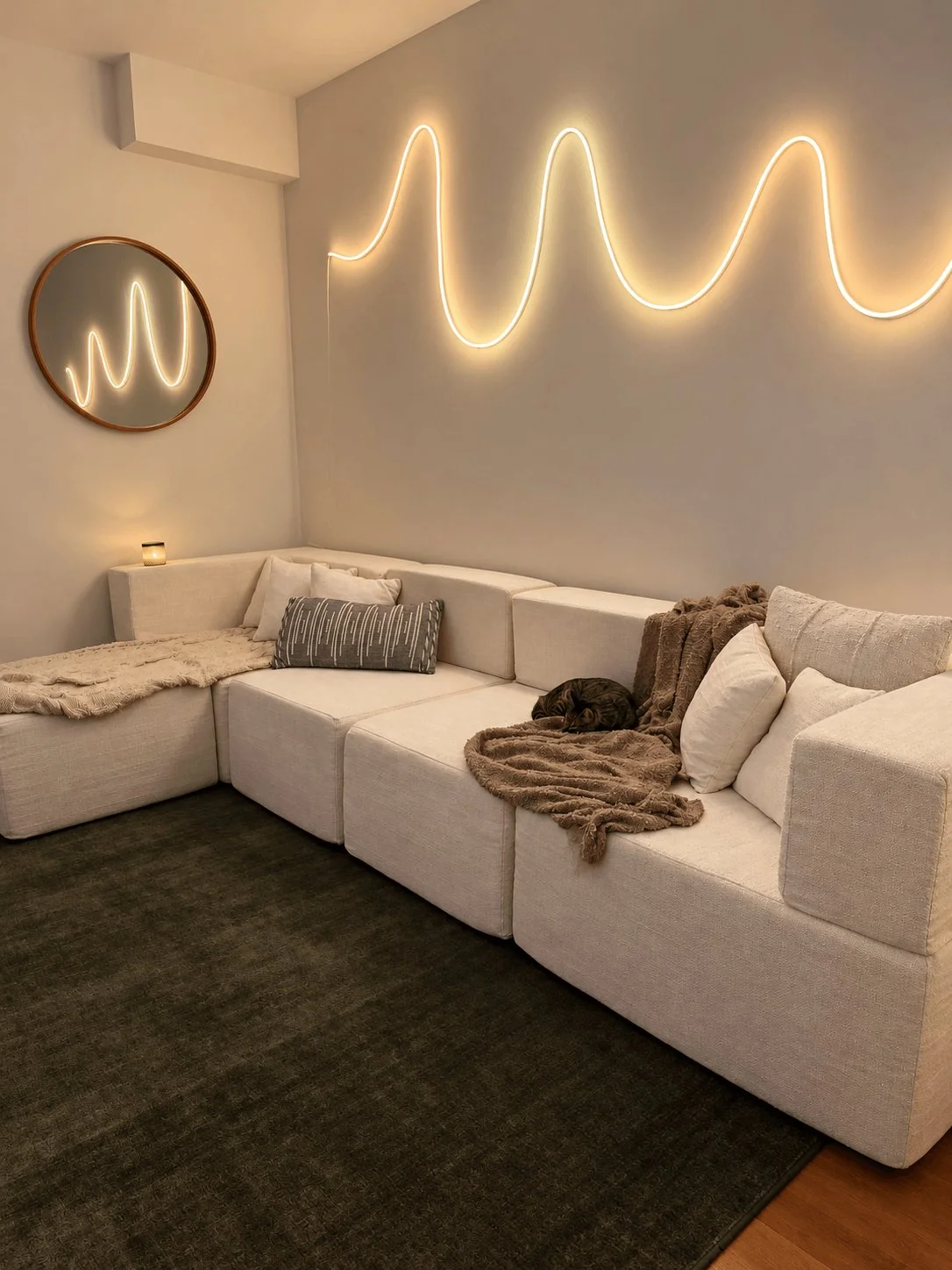
Unlike traditional sectionals with a fixed frame, the Monvane uses individual foam sections that can be arranged into a loveseat, chaise, or larger lounging area. The foam construction gives it a casual, cushioned feel rather than the structured seating you’d expect from a conventional framed sofa. It’s the kind of design worth considering if you prefer a relaxed lounging setup over a formal, upright silhouette.
The upholstery was another highlight. The soft ivory fabric made our living room feel brighter and more inviting, while the removable, washable covers offered some practical reassurance for everyday spills, pets, and general wear.
What surprised us most wasn’t the appearance, but the flexibility. By rearranging the sections, we gained roughly 18 inches of additional space between the sofa and coffee table. We even reconfigured the seating for a six-person dinner in under four minutes.
Our experience reinforced something worth remembering when shopping for a modular sectional: firmness, upholstery texture, and flexibility should all factor into your decision. Foam-based seating can feel different from a traditional sofa, so it’s important to consider whether you prefer a plush, lounge-oriented feel or firmer, more supportive seating.
For anyone furnishing an apartment or a living room that needs to serve multiple purposes, Monvane is another option worth exploring.
Read Our Full Monvane Modular Sofa Review
The Honest Verdict
Modular sectionals in a box are one of the genuinely good furniture shifts of the last few years. The construction has caught up to the convenience, covers are washable and replaceable, and the layouts actually flex when your life does. For the price of a mid-tier traditional sofa, you can get a bigger, more adaptable piece that arrives without a freight appointment.
The main thing to get right is the match between sofa and space. Measure first, pick fabric for your household, and favor brands with a real return window and documented foam specs. Do that, and the odds of landing a sofa you love for the next five-plus years are genuinely high.
If we had to recommend one to start with, it’s the Hestia. Storage, cup holders, modular layout, fabrics that fit the moment — it’s the most complete package in its price range right now.