
Manuka honey has earned its spot on the skincare shelf because it genuinely calms, hydrates and plays well with sensitive skin. Our Suzanne Organics honey gel review and this broader love letter to the ingredient will tell you why your grandmother’s kitchen remedy lines up almost perfectly with what a dermatologist would hand you today.
The Ingredient That Bridges Folk Wisdom and the Clinic
Grandmothers reached for honey because it worked. A dab on a scrape, a spoonful in hot tea, a mask on a dull complexion before a wedding. Dermatologists reach for Manuka honey now because its composition is unusually well-suited to skin that is irritated, dry or reacting to the weather.
Here is what sets Manuka apart from regular honey:
- It comes from bees that pollinate the Manuka bush (Leptospermum scoparium), native to New Zealand
- It contains methylglyoxal (MGO), the compound responsible for its signature soothing properties
- It is graded by UMF (Unique Manuka Factor) or MGO numbers so you know what you are getting
- It is a humectant, which means it pulls moisture into skin rather than sitting on top

If you are curious about the raw ingredient side of things, Manukora is a New Zealand brand worth looking at for the spoon-and-toast version. Their traceable, MGO-tested jars are what we point people to when they ask where to start with Manuka in the kitchen.
Why Winter Skin Falls for Manuka Honey
Cold air outside, dry heat inside, more hot showers, more red wine, more sugar cookies. Skin takes the hit. Flushing, tightness, a patch here, a flake there.
Manuka honey fits the season because it does three things at once: it holds moisture against the skin, it is gentle enough for reactive complexions, and it has a naturally soft, cushiony feel that makes it pleasant to apply when your face already feels raw. A few of the reasons it keeps showing up in winter routines:
- Humectant action — binds water to the skin barrier so moisturizer has something to lock in
- Low reactivity — most sensitive skin tolerates it beautifully, even around the eyes
- Barrier support — a happy barrier means less of that tight, glassy feeling after cleansing
- Layerability — plays nicely under sunscreen, under makeup, over a serum
The Soothing Ritual Worth Adding to Your Winter Shelf
A good winter routine is short and consistent: gentle cleanser, hydrating treatment, moisturizer, SPF in the morning. The hydrating treatment step is where a Manuka honey gel earns its keep, especially on days when skin feels hot, blotchy or just over-it from holiday travel and central heat.
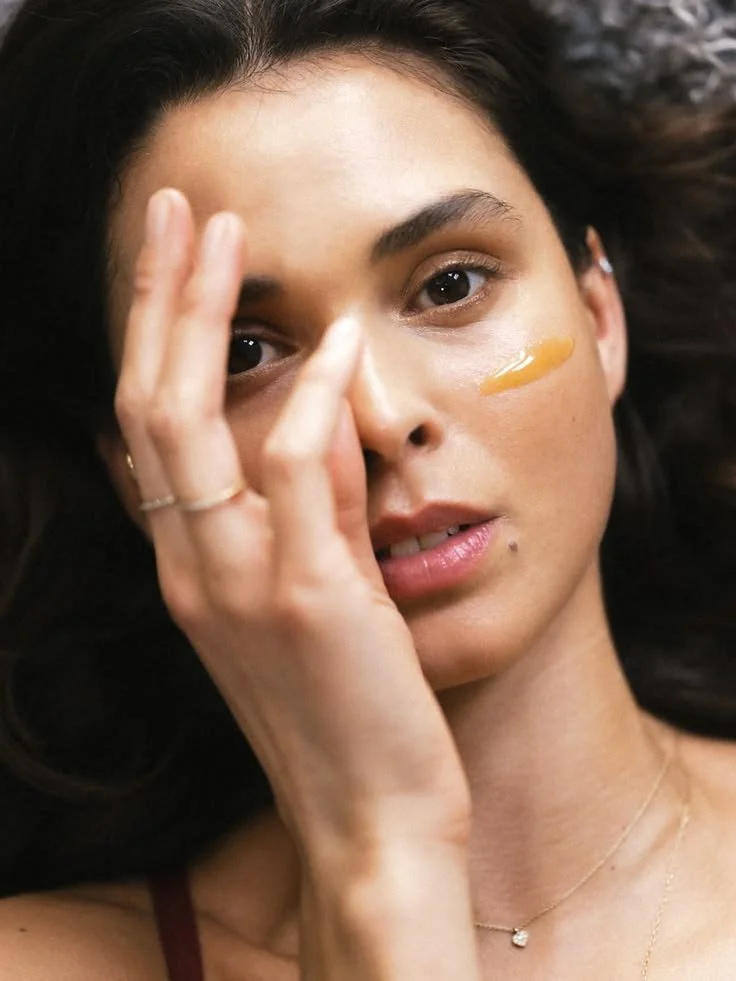
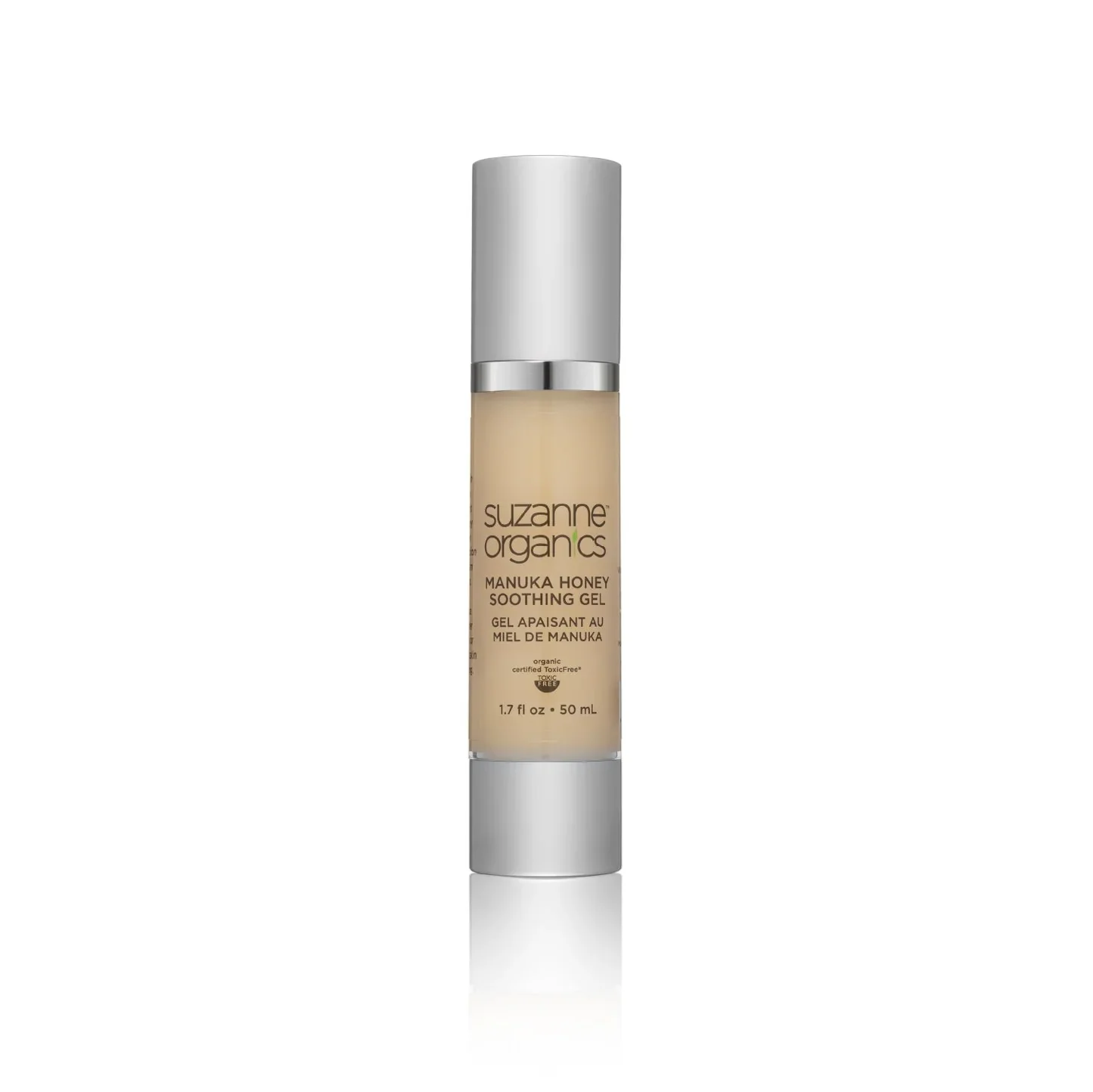
The one we keep recommending is the Suzanne Organics Manuka Honey Soothing Gel, a lightweight, honey-tinted gel that goes on cool and sinks in without leaving tackiness behind. It is a lovely middle step for skin that gets reactive after a long flight, a glass of champagne, or a windy walk home, and it layers neatly under richer creams when the thermostat drops.
The ritual itself matters as much as the formula. Warming the product between your fingers, pressing it into your cheeks rather than rubbing, giving it thirty seconds before the next step — small habits that make any ingredient-conscious routine feel like a real moment instead of a rushed obligation.
How to Shop Manuka Without Getting Lost in the Numbers
Manuka labeling can look like a math test. A quick cheat sheet so you can walk into a store or scroll a site and know what you are looking at:
- UMF 5+ / MGO 83+ — everyday, mild, fine for tea and toast
- UMF 10+ / MGO 263+ — the sweet spot for most skincare and wellness uses
- UMF 15+ / MGO 514+ — stronger, often used topically for specific concerns
- UMF 20+ / MGO 829+ — the top tier, priced accordingly
For skincare formulas, you do not need to chase the highest number. What matters is that Manuka honey is high enough on the ingredient list to actually do something, and that the rest of the formula supports it rather than fighting it. The team at Peak&Pick tends to flag products where the honey is doing real work rather than sitting at the bottom of the label as marketing garnish.
Small Habits, Big Payoff
The Manuka obsession is not a trend — it is a quiet handshake between what grandmothers always knew and what ingredient scientists can now measure. Add it to your shelf, add it to your tea, give your skin a soft place to land this winter and see how much calmer everything feels by February.